
Steel Sectional Panels
We stock panel sections and hardware sized for what's actually out on doors here - steel sectional panels in the widths that match 2000s-era garages, along with the end stiles, hinges, and rollers that bolt to them.
Stallings, Charlotte
Most Stallings garage doors date to right around 2002 - steel sectional, standard sizes. We replace damaged panels on that stock, traveling from Charlotte, 12 miles out.
Job timing
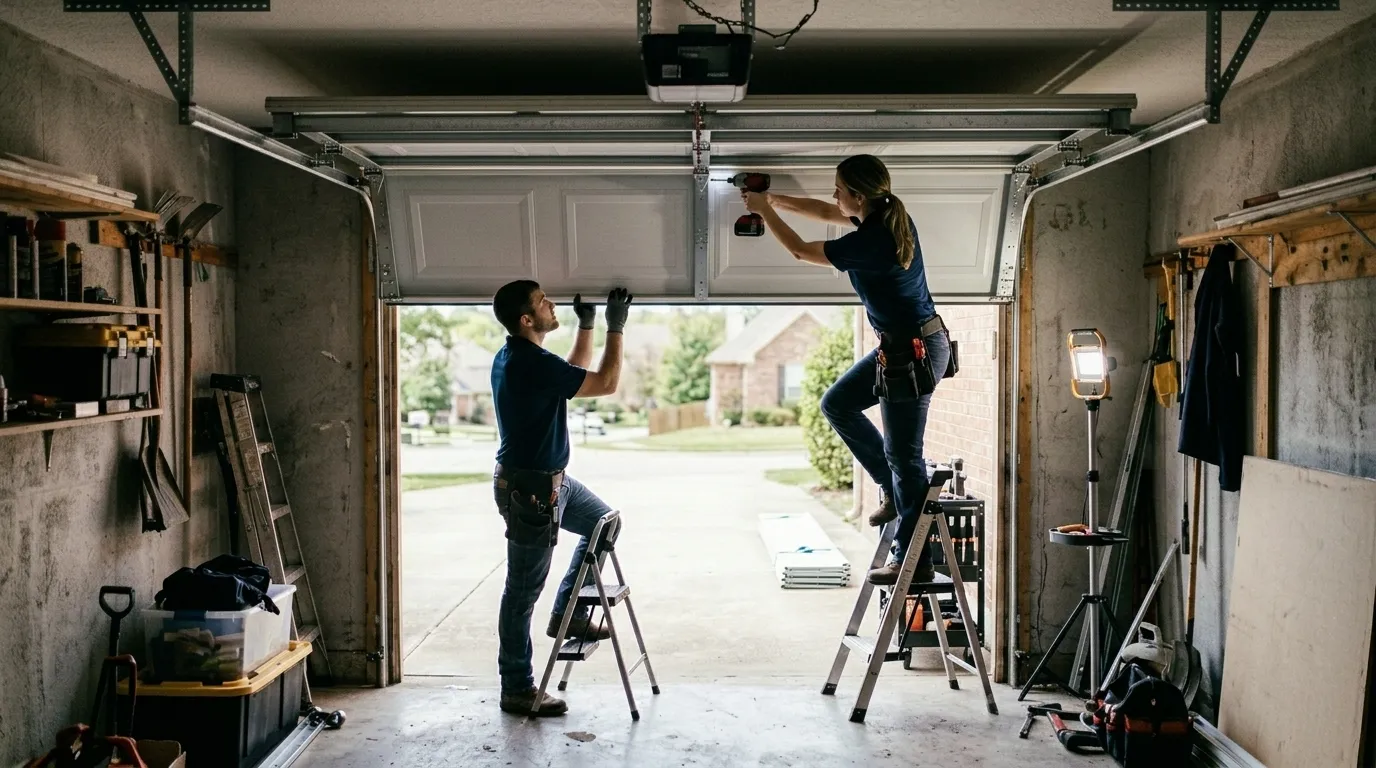
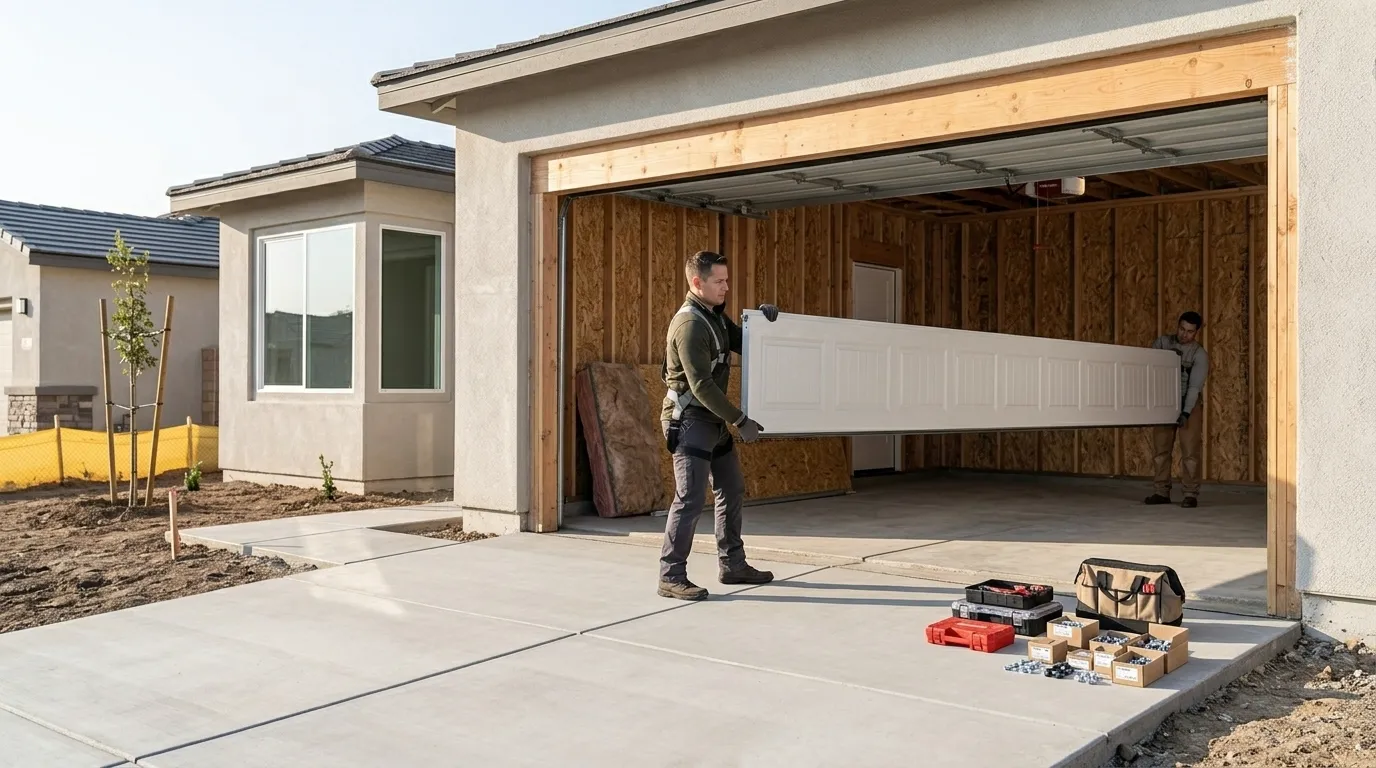
A panel swap on a Stallings door usually runs a couple hours once we've got the right section in hand, sometimes less if it's a single panel on a standard 16x7 steel sectional - the size and style that went up on most houses here when the neighborhood was built out around 2002. The clock isn't the hard part. Matching the panel is. A door built in 2002 has had two decades of sun fade and minor dings, so a brand-new section from the same manufacturer line can sit next to the old ones looking slightly off in color even after it's bolted in correctly. We tell people that up front rather than let them find out on their own driveway. If the whole door's faded evenly and you're only losing one panel to a dent or a rusted-through bottom section, we can usually source a close match. If the fade is patchy, replacing the full door sometimes makes more visual sense than chasing a panel that won't blend. We'll say so before we quote it, not after.
On the truck
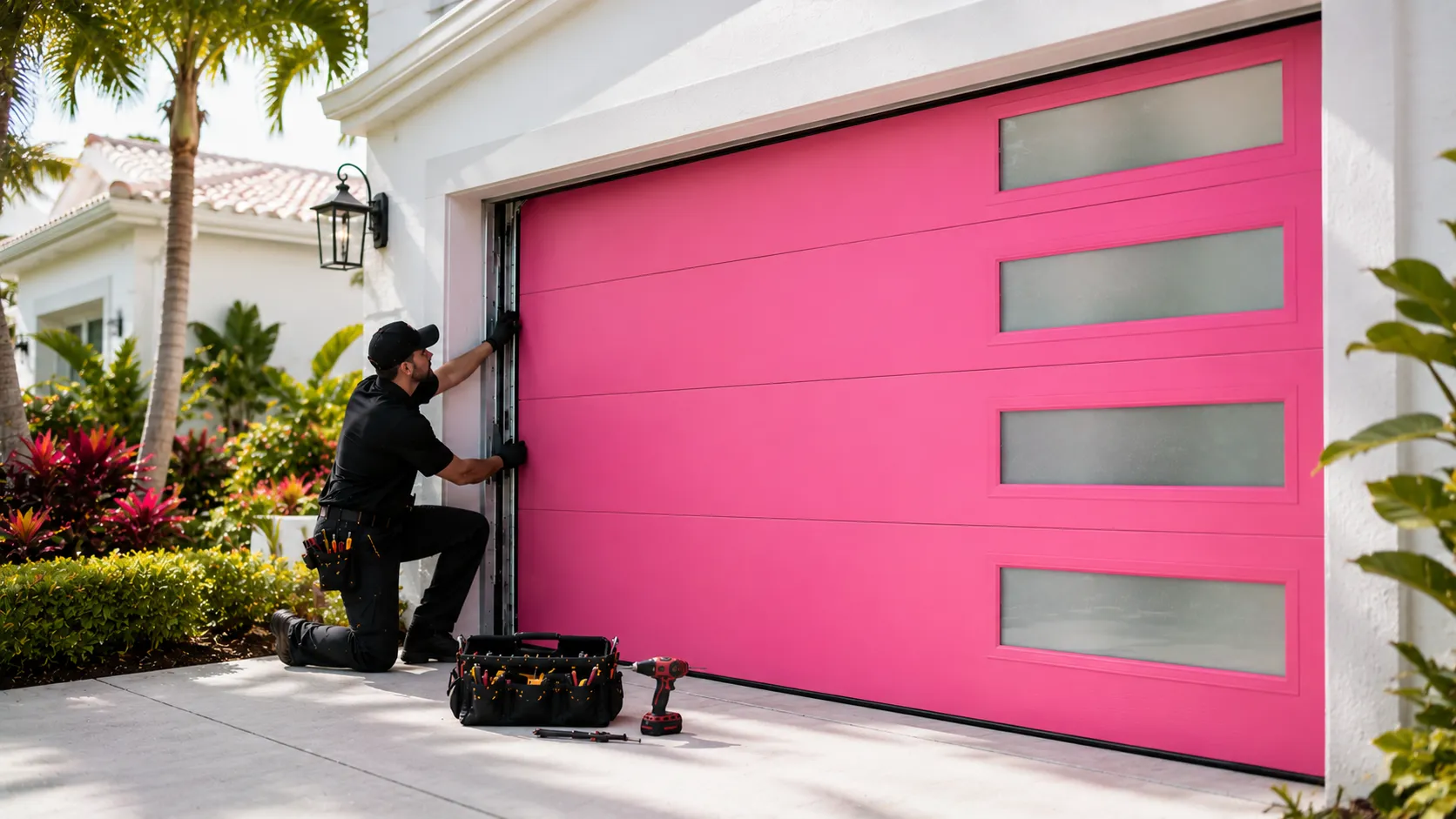
We stock panel sections and hardware sized for what's actually out on doors in this area, and Stallings' climate and build era both shape what that stock looks like.
We stock panel sections and hardware sized for what's actually out on doors here - steel sectional panels in the widths that match 2000s-era garages, along with the end stiles, hinges, and rollers that bolt to them.
Stallings sits in a cold-moderate climate band, which is why doors from that era used steel skins with polystyrene or polyurethane cores rather than bare aluminum. Insulation mattered even on an unheated garage, since a bare steel door radiates cold into an attached house.
We're generally not fighting a door from the 1970s or earlier with odd, discontinued track spacing. That's a break for both of us - the truck usually carries something close enough to fit rather than needing a special order.
Where we do special-order is color match on doors that have taken more than the usual weather exposure, or panel profiles from smaller manufacturers that didn't survive as long in the market. We'll tell you on-site if that's the situation.
Symptoms
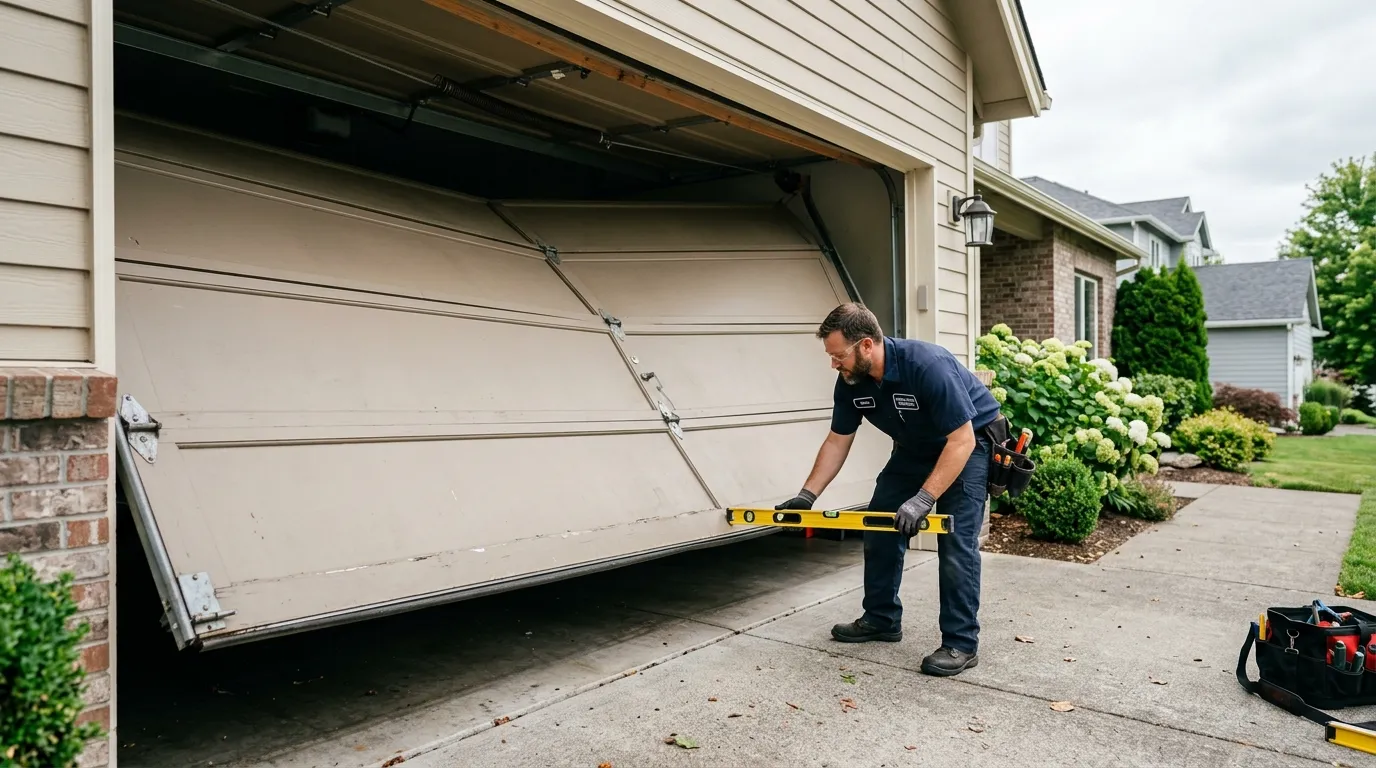
Panel failures on doors from this era in Stallings usually start the same way - a bumper or hitch catches the bottom section. Here's how that plays out on an insulated door versus a solid one.
Panel failures on doors from this era usually start the same way - a car bumper or trailer hitch catches the bottom section, and the steel skin creases or the polystyrene core cracks free from the frame.
Because these doors have insulated cores rather than solid steel, a hard hit doesn't always bend the whole panel. Sometimes it delaminates the skin from the foam, and the door still opens and closes but looks wrong and lets a draft through.
If your door is dented and still tracks fine, the panel itself is usually the fix and the rest of the door is sound. That's a different repair from a torsion spring failure, where the door just won't move at all.
If it's dented and now binds or drags on the track, the impact likely knocked a roller or hinge out of alignment too. That gets fixed at the same visit rather than as a second call.
Watch-outs
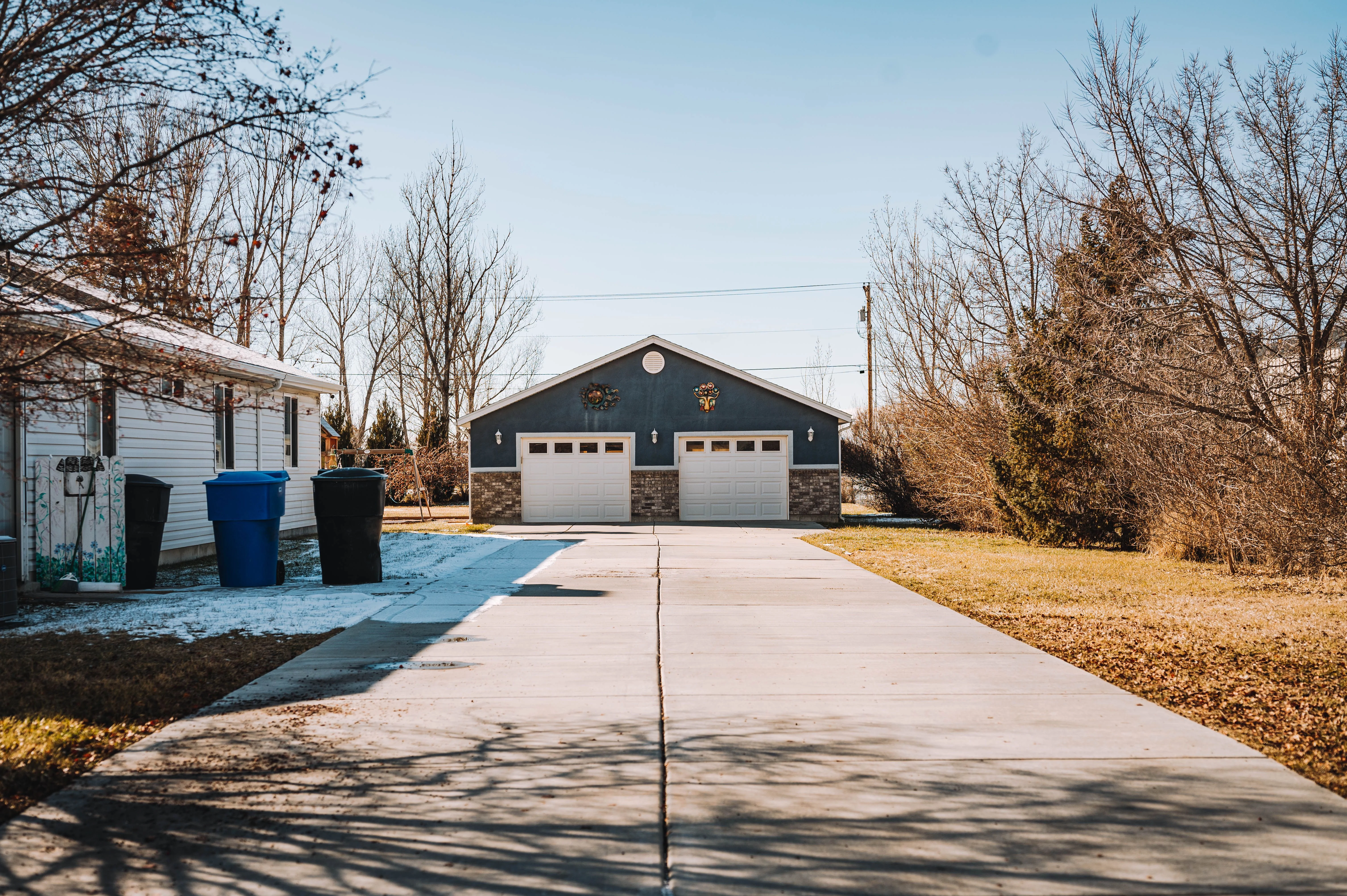
The complication we run into most in Stallings isn't the repair itself - it's finding a panel that matches a door that's now over twenty years old and has faded unevenly across its face. Manufacturers change their steel gauges and color coats over time, so a panel ordered today to match a 2002 install won't always come back identical, even from the same brand. We also see doors here where a previous owner replaced one panel years back with whatever was available, so by the time we're called the door already has a mismatched section on it and we're trying to blend a third color into two others. None of that stops the repair from working mechanically - the door will operate fine - but it's worth knowing before you commit to a single-panel fix instead of a full door. We're honest about when a repair will leave a visible seam versus when it'll disappear into the rest of the door.
DIY or pro
Swapping a single panel yourself is possible if you can source the exact matching section, but the part most people underestimate is the fasteners and alignment, not the panel itself. Here's what that actually takes, and where it stops being a weekend job.
Swapping a single panel yourself is possible if you can source the exact matching section for a steel sectional door from the 2000s. Getting that part number right is the first hurdle, before any tools come out.
Panels bolt to hinges that have to sit dead level with the panels above and below, or the door will bind against the track the first time it cycles. Get that slightly wrong and you can crease a brand-new panel on day one forcing it through.
If you're comfortable with hand tools and patient about squaring things up, a top or bottom panel on an otherwise sound door is a reasonable weekend project. What we don't recommend is anything involving the spring side under tension, or a full swap when you're not sure the remaining sections are square.
Questions
It depends on how much the existing panels have faded. Doors built around 2002 that have had two decades of sun exposure often show a color shift, so a brand-new panel from the same manufacturer can look slightly different even when it's the correct part number. We check the fade before quoting and tell you honestly whether it'll blend or stand out.
We carry panel sections and hardware sized for the steel sectional doors common in this area's 2000s-era housing. Most jobs here fit that window, so we can usually source a matching section without a long special order. Doors from older or unusual manufacturer lines sometimes take longer - we'll tell you on-site if that's the case.
If one panel is dented but the door still tracks straight and the color match will hold up, a single-panel repair is usually the cheaper and faster route. If the dent has knocked the door out of alignment, or the existing panels are faded unevenly enough that a new section won't blend, replacing the full door sometimes makes more sense. We'll walk you through both before we quote.
Stallings sits about 12 miles from Charlotte. We travel out from there for panel replacement jobs; there's no separate branch in Stallings, so scheduling runs through our Charlotte-based crew.
Explore more
Ready when you are
Charlotte Garage Door Pros repairs and installs garage doors, springs and openers in Charlotte, NC and the surrounding area.