
Won't lift or stops short
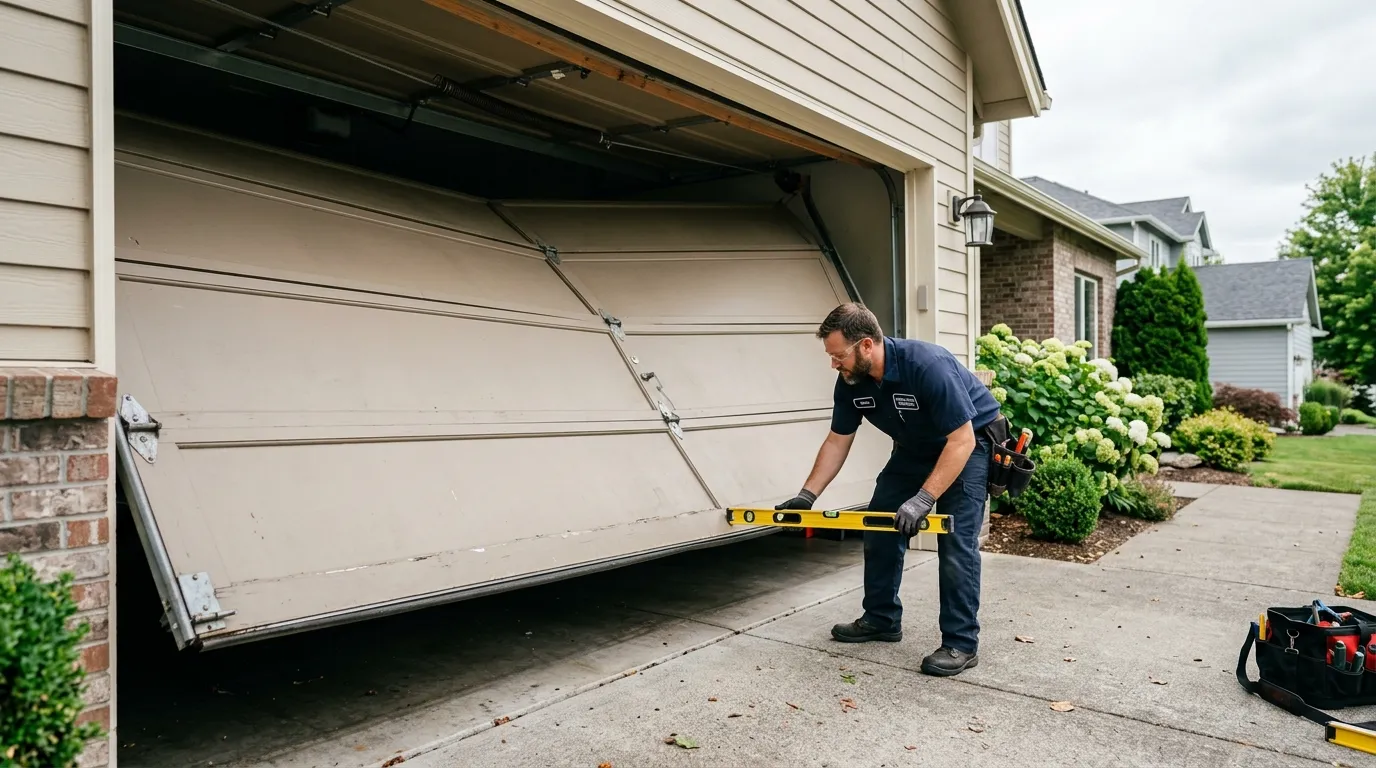
The door won't lift, or it lifts about six inches and stops. Sometimes it slams down instead of lowering on its own weight.
Charlotte, NC
Broken torsion spring on a Charlotte house built in the 2000s? We fix the springs that match this area's housing stock and cold-moderate winters. Same service area, real parts.
Job timing
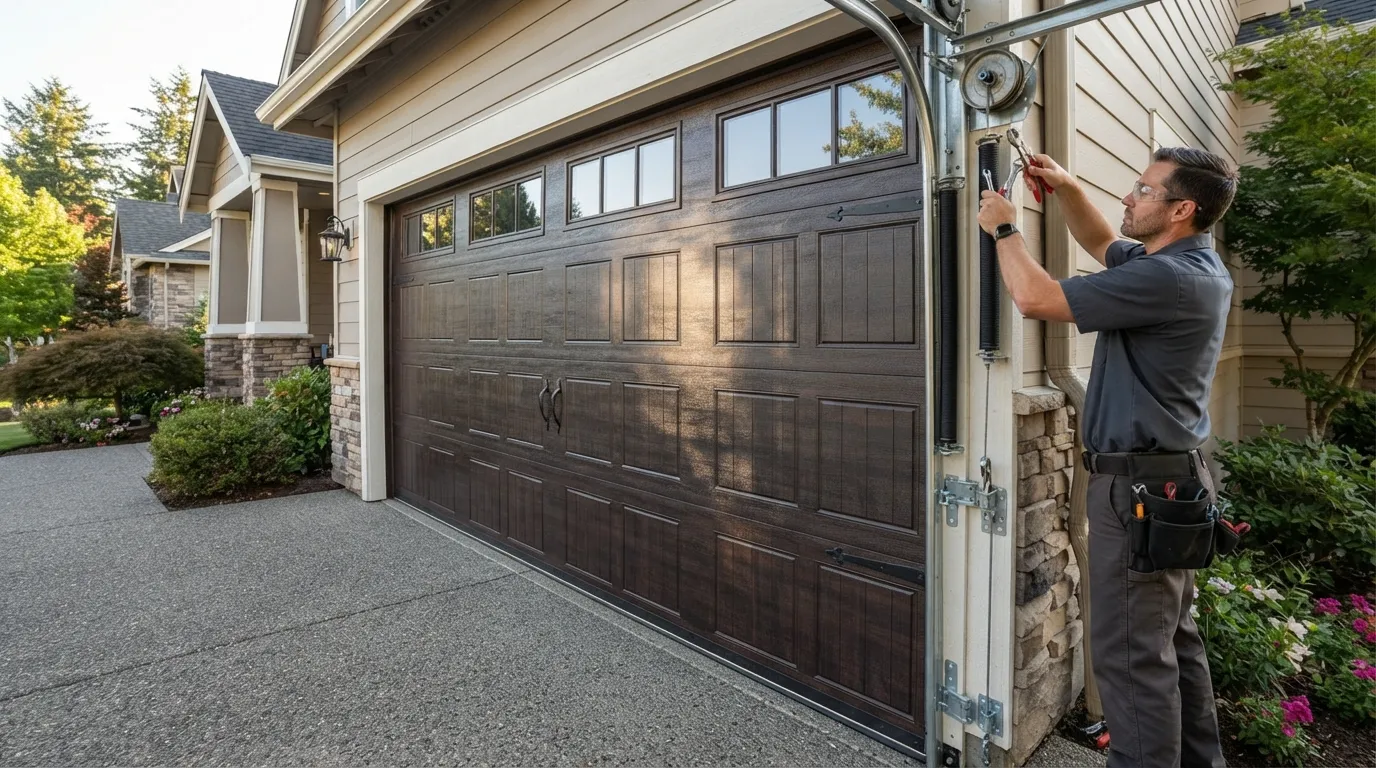
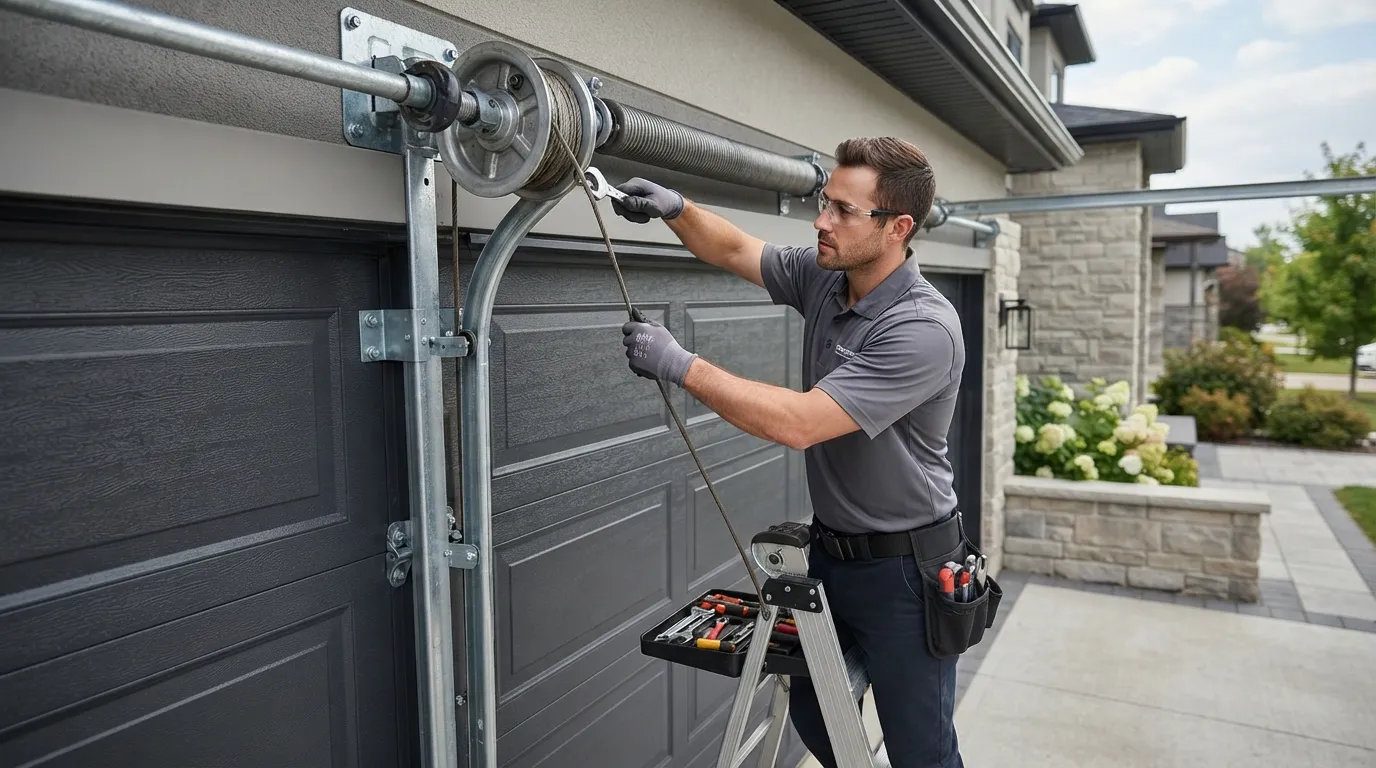
A torsion spring job on a standard double door runs a set amount of time once the truck is on-site. Here's what actually happens during that visit, and what can add time to it.
Once the truck is on-site, we pull the old springs, wind new ones to the right cycle count, and run the door through a full open-close cycle to check balance. Single doors go faster than doubles.
A door with two broken springs takes about the same time as one with a single broken spring, because the whole pair gets replaced together regardless.
What adds time isn't the spring itself - it's finding the right wire size and wind for a door that's been mismatched or repaired with the wrong part before.
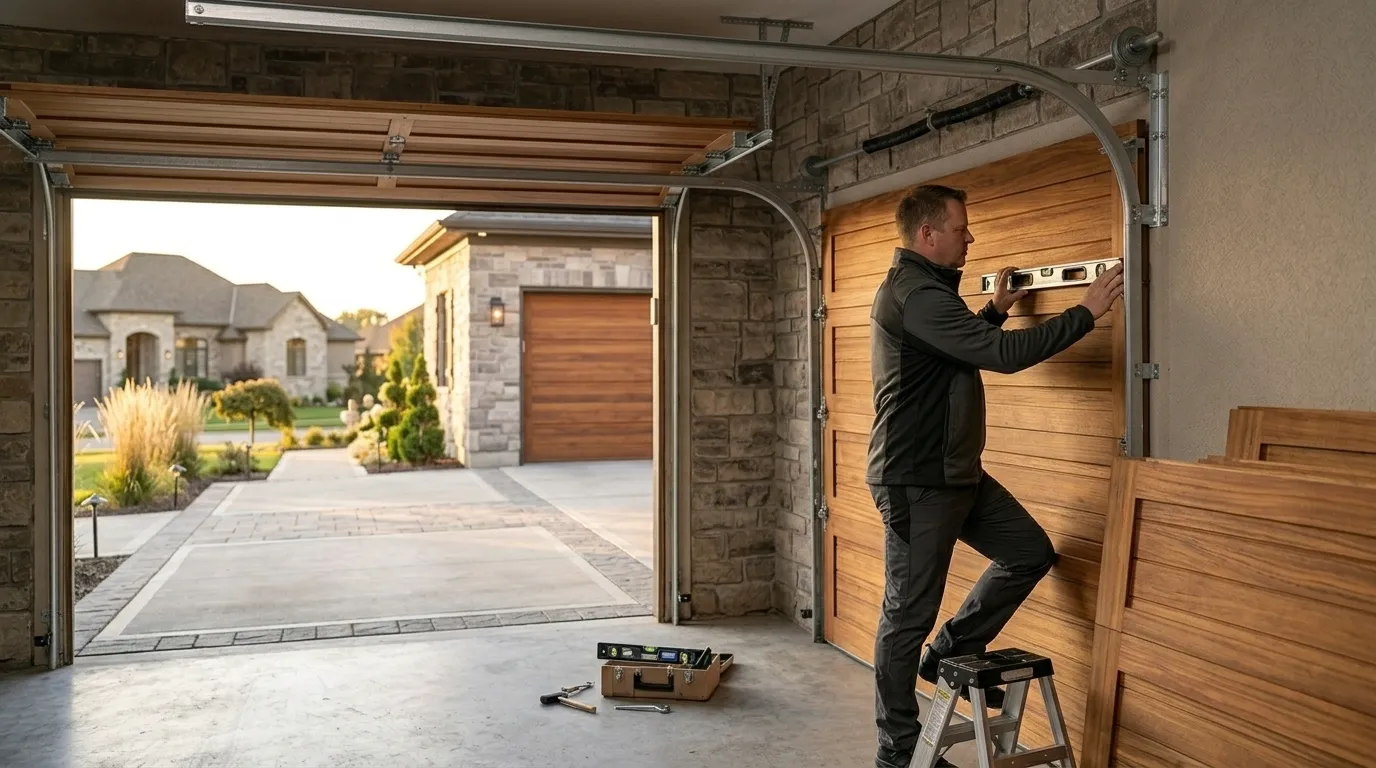
Given that most of the housing across this service area was built between 1967 and 2011, with the bulk of it going up in the 2000s, we're usually working on standard extension or torsion setups rather than the oddball hardware you'd find on a much older house. We carry common spring sizes on the truck for exactly that reason, though a same-day fix isn't guaranteed on every non-standard door - some commercial-grade or custom doors need a spring ordered in.
Symptoms
The door won't lift, or it lifts about six inches and stops. Here's what those signs actually point to.
The door won't lift, or it lifts about six inches and stops. Sometimes it slams down instead of lowering on its own weight.
Sometimes there's a loud bang from the garage - that's usually the spring itself failing, not the opener.
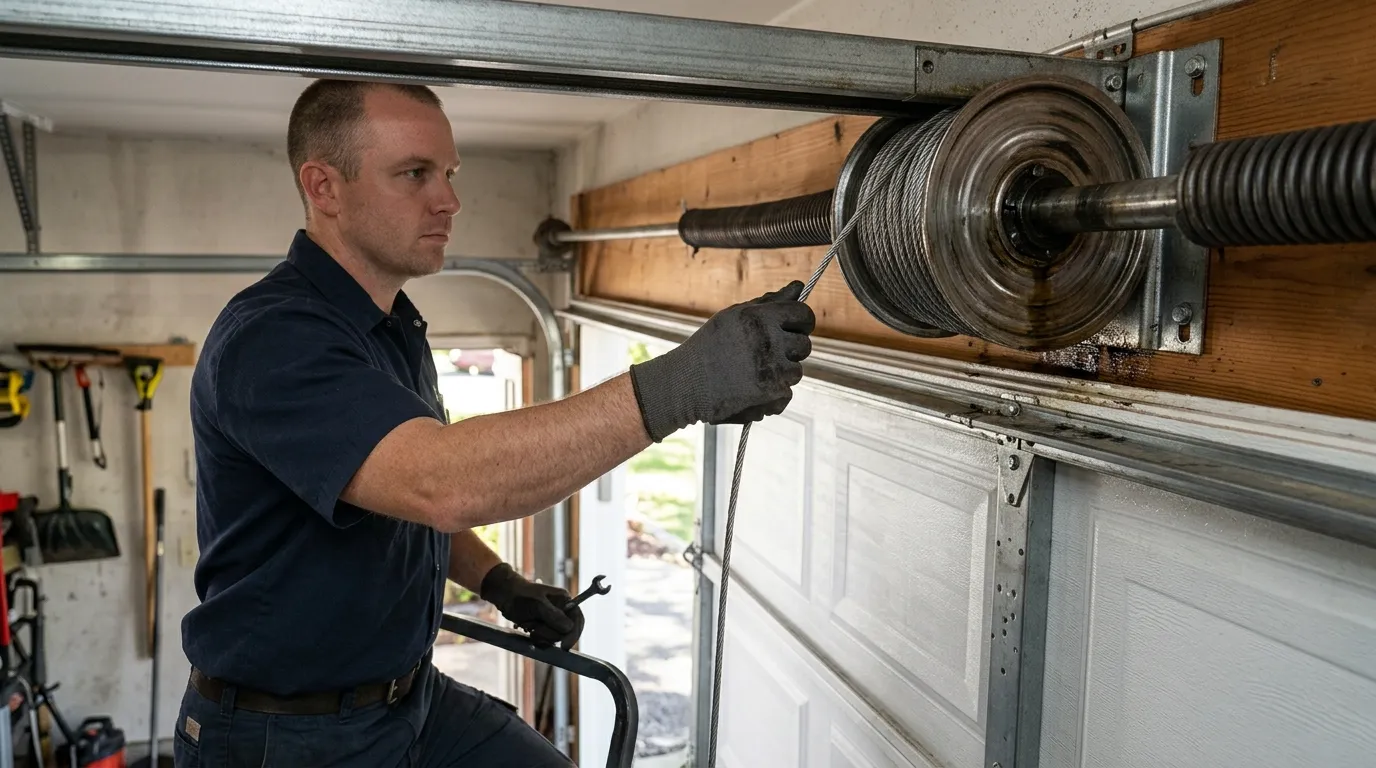
If you look up at the door and see a gap in the coiled spring above the door, or one side of the spring looks stretched and the other doesn't, that's a broken torsion spring, not a motor problem.
A garage door opener motor is built to move a balanced door - it was never meant to lift the full dead weight of a panel on its own, so when a spring goes, the opener straining and clicking is a symptom. Homeowners across this area often call describing opener trouble first, and it turns out to be the spring every time.
DIY or pro
A torsion spring is wound under enough tension to do real damage if it lets go while you're working on it. Here's where a homeowner can help, and where the risk isn't worth it.
A torsion spring is wound under enough tension to do real damage if it lets go while you're working on it - this isn't a bolt-and-wrench job for most people, and we say that plainly rather than hedge it. Extension springs are a little more forgiving but still not something to guess at with the wrong bar length or anchor point.
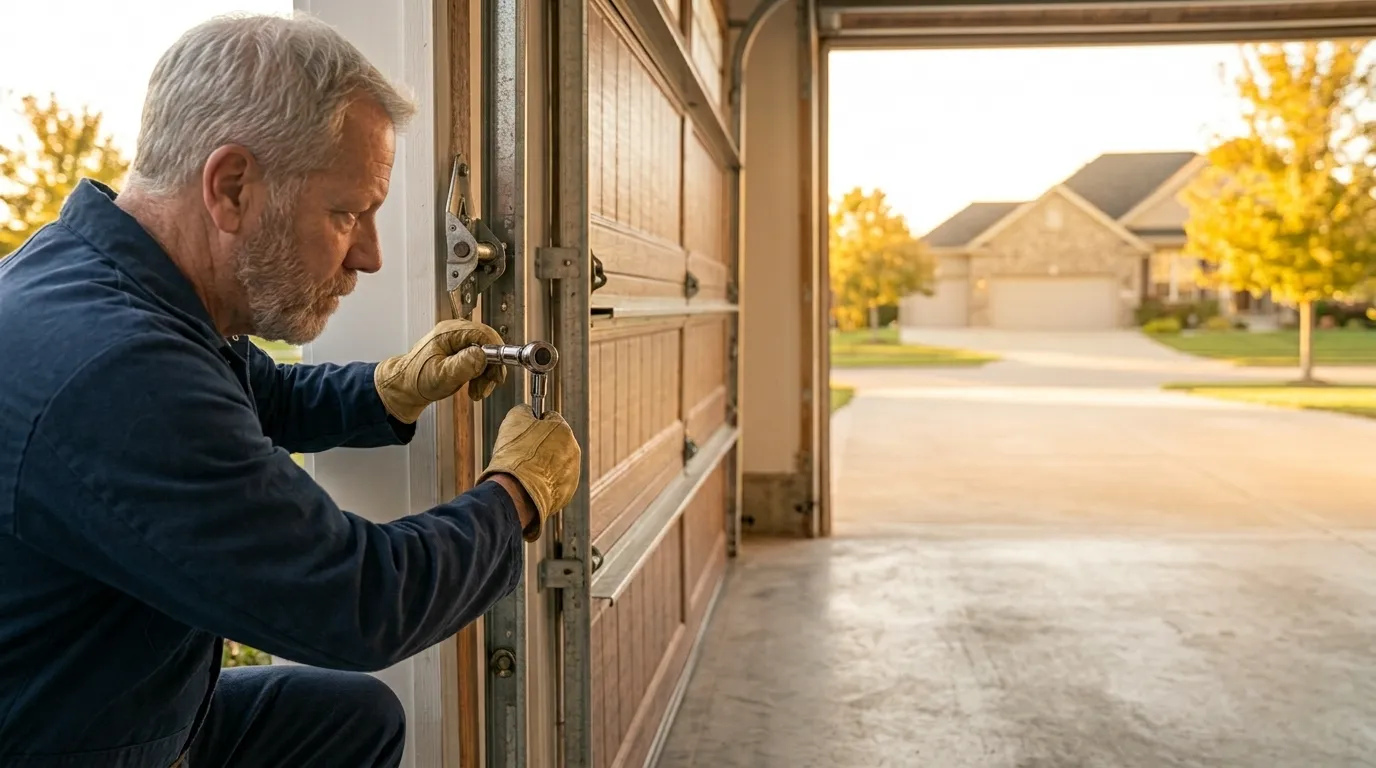
Tightening loose hinge bolts, lubricating hinges and rollers, or replacing a bent bottom bracket that isn't under load are all reasonable for a homeowner to handle.
Any job where the spring is still coiled and under tension is off-limits - a slipped winding bar under that load has put people in the ER.
If your door came from the housing boom era common across this area - built between 1967 and 2011 with most stock dating to the 2000s - the spring size and mount are usually standard, but standard still means wound tight.
Local causes
Two things push spring failure across this service area faster than a generic estimate would suggest. First, the housing stock: a large share of homes here were built in the 2000s, which means a large share of original springs are now roughly two decades old and hitting the end of their rated cycle count around the same window of years, house after house, subdivision after subdivision. Second, the climate: this area sits in a cold-moderate band, and steel spring wire that goes through repeated winter temperature swings loses tension and gets brittle faster than wire that never sees a cold snap. Combine an aging original spring with a winter cold spell and that's the week the call volume goes up. Across roughly 83,000 households and close to 58,000 owner-occupied houses in this service area, that adds up to a lot of doors hitting the same age at the same time. We don't stock every spring size for every non-standard door on the truck, but for the standard torsion and extension setups common to housing built in this window, we usually have the match already loaded.
Questions
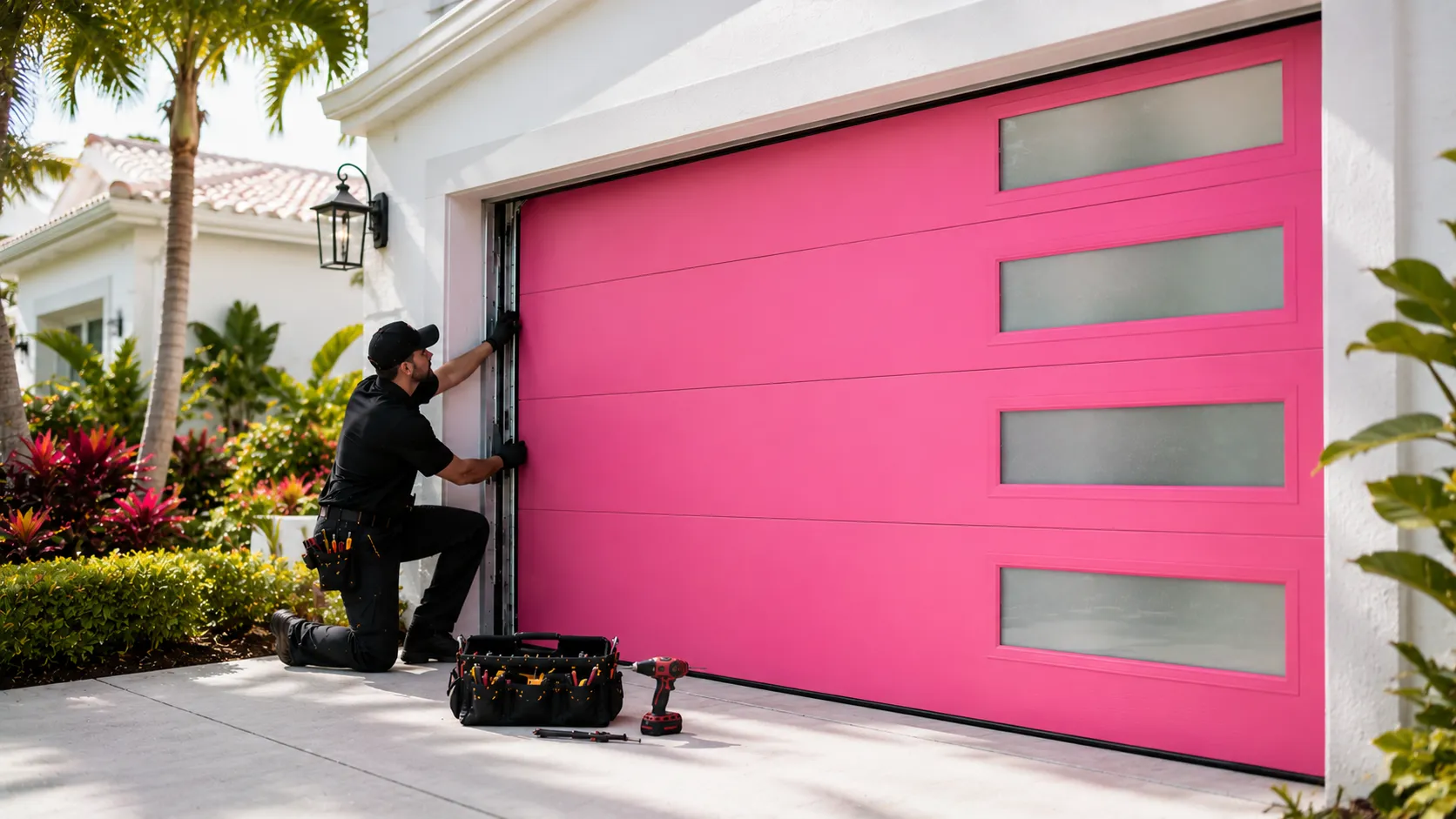
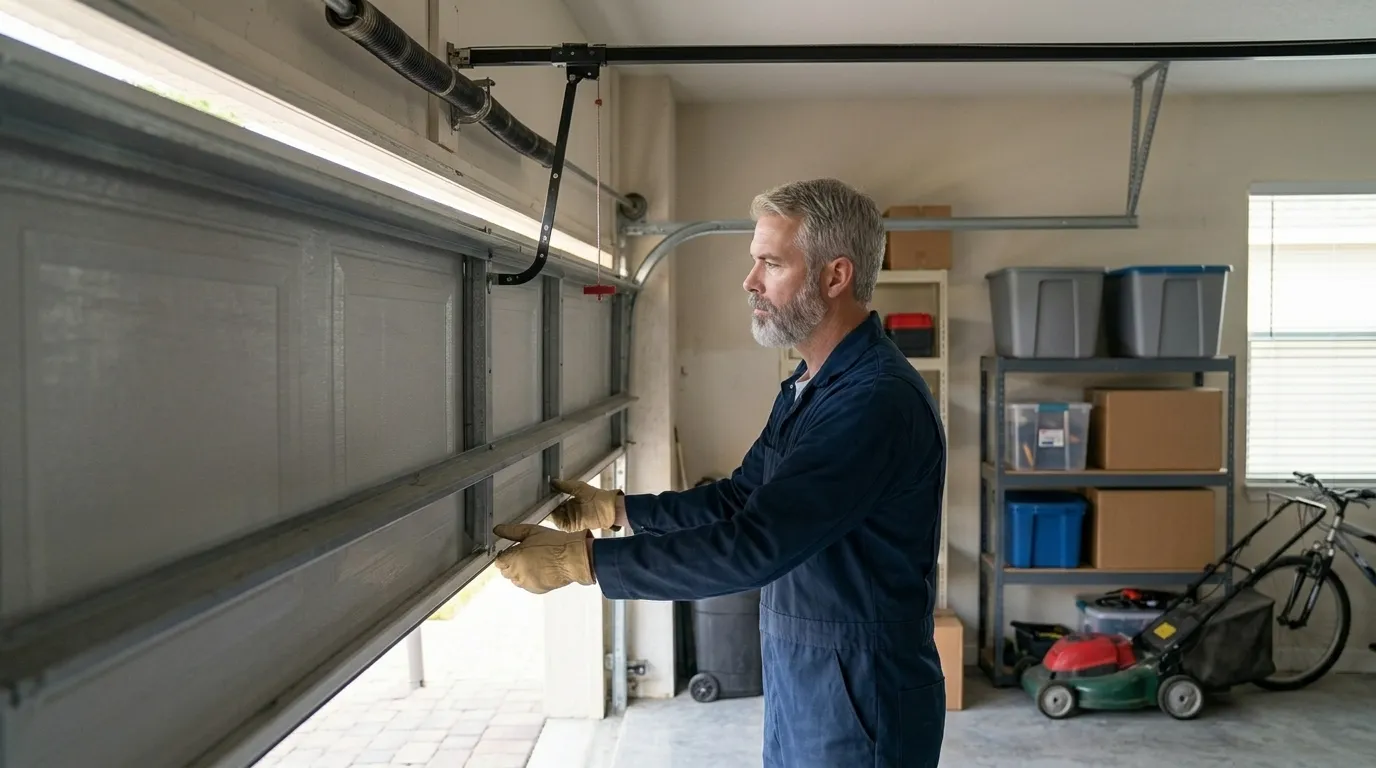
Look at the door with the opener disconnected - pull the manual release cord. If the door feels heavy and drops on its own instead of staying balanced, the spring is broken, not the motor. A working spring holds a disconnected door roughly level.
Steel spring wire loses flexibility in cold weather, and this area sits in a cold-moderate climate band with real winter temperature swings. A spring already near the end of its cycle life is more likely to snap during a cold stretch than a mild one.
On a double-spring setup, we replace both even if only one broke - mismatched spring age means uneven wear and a second failure soon after. We don't have a listed price to quote here, but matched pairs are standard practice for a reason.
No. A torsion spring is wound under heavy tension and an improperly handled winding bar can cause serious injury. This is one job we don't recommend as a DIY fix, regardless of how simple it looks.
Explore more
Ready when you are
Charlotte Garage Door Pros repairs and installs garage doors, springs and openers in Charlotte, NC and the surrounding area.