
Groaning, jerking, reversing
The door groans, jerks, or stalls partway up, then reverses on its own. Sometimes it's a loud bang from the garage first - that's almost always a torsion spring letting go, not the opener.
Charlotte, NC
Charlotte homes built between 1967 and 2011 carry original hardware that wasn't made for our swing seasons. We service springs, openers, and tracks across the metro.
Job timing
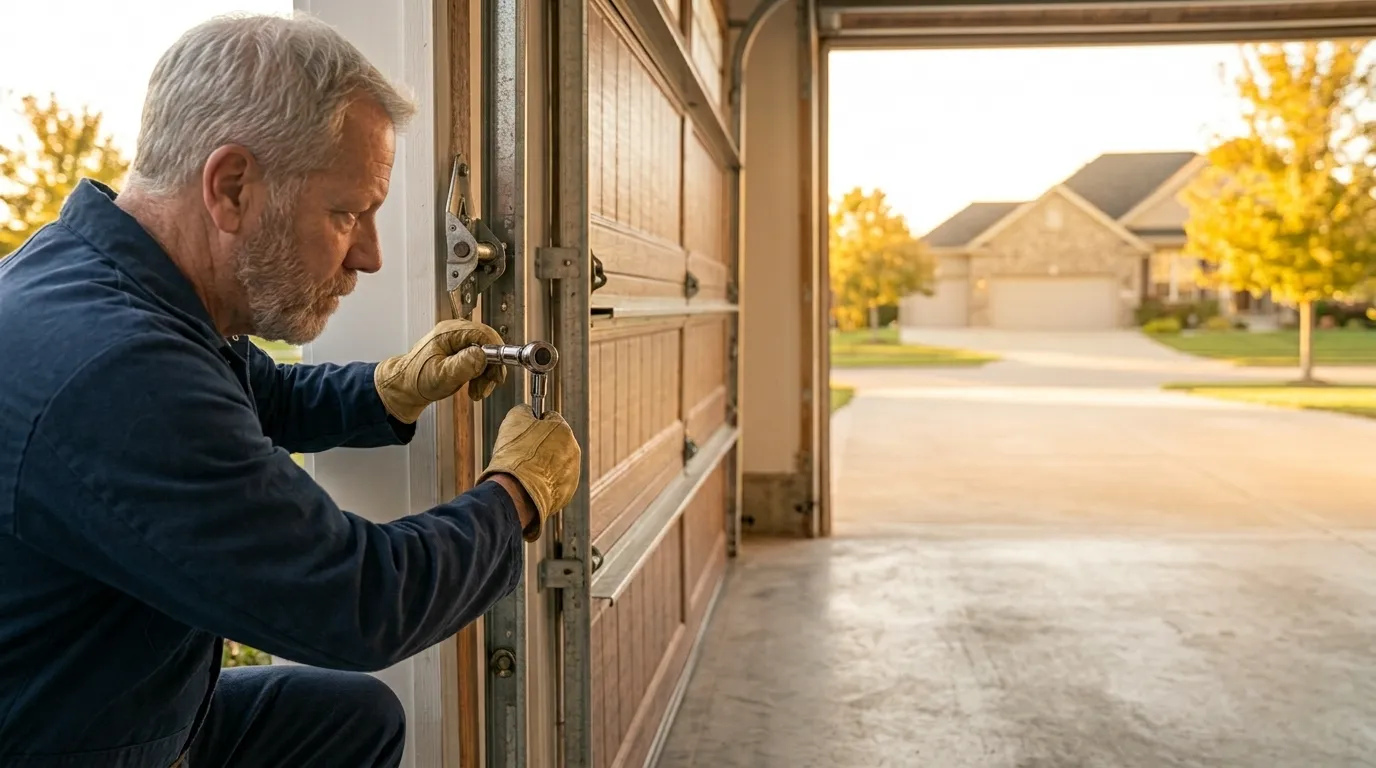
Most of our calls come from the same handful of neighborhoods, and that's not an accident - the service area's housing stock ages out on a predictable schedule. Here's how we work a typical service call.
Most of our calls come from the same handful of neighborhoods: Elizabeth, Dilworth, Myers Park, Cotswold, Foxcroft, and out toward Pineville and Mint Hill.
The service area we cover runs about 83,123 households, and a big share of the doors we touch went up somewhere between 1967 and 2011, with the median build year landing around 2001. A door installed in 2001 is old enough now that the original torsion spring has usually cycled past its rated life.
We look at the install date the hardware tells us - springs, drums, and openers all leave clues - and work from there instead of guessing, including whether the opener's drive gear or circuit board is due to start acting up.
A spring swap on a standard double door, once we've got the right size in the truck, doesn't take all morning. What takes longer is diagnosing intermittent opener faults - the kind where the door works fine when we're standing there and fails when nobody's watching. Those calls take patience, not just parts.
Symptoms
The complaint we hear most: the door groans, jerks, or stalls partway up, then reverses on its own. Here's what those signs usually mean given the housing stock we're working with.
The door groans, jerks, or stalls partway up, then reverses on its own. Sometimes it's a loud bang from the garage first - that's almost always a torsion spring letting go, not the opener.
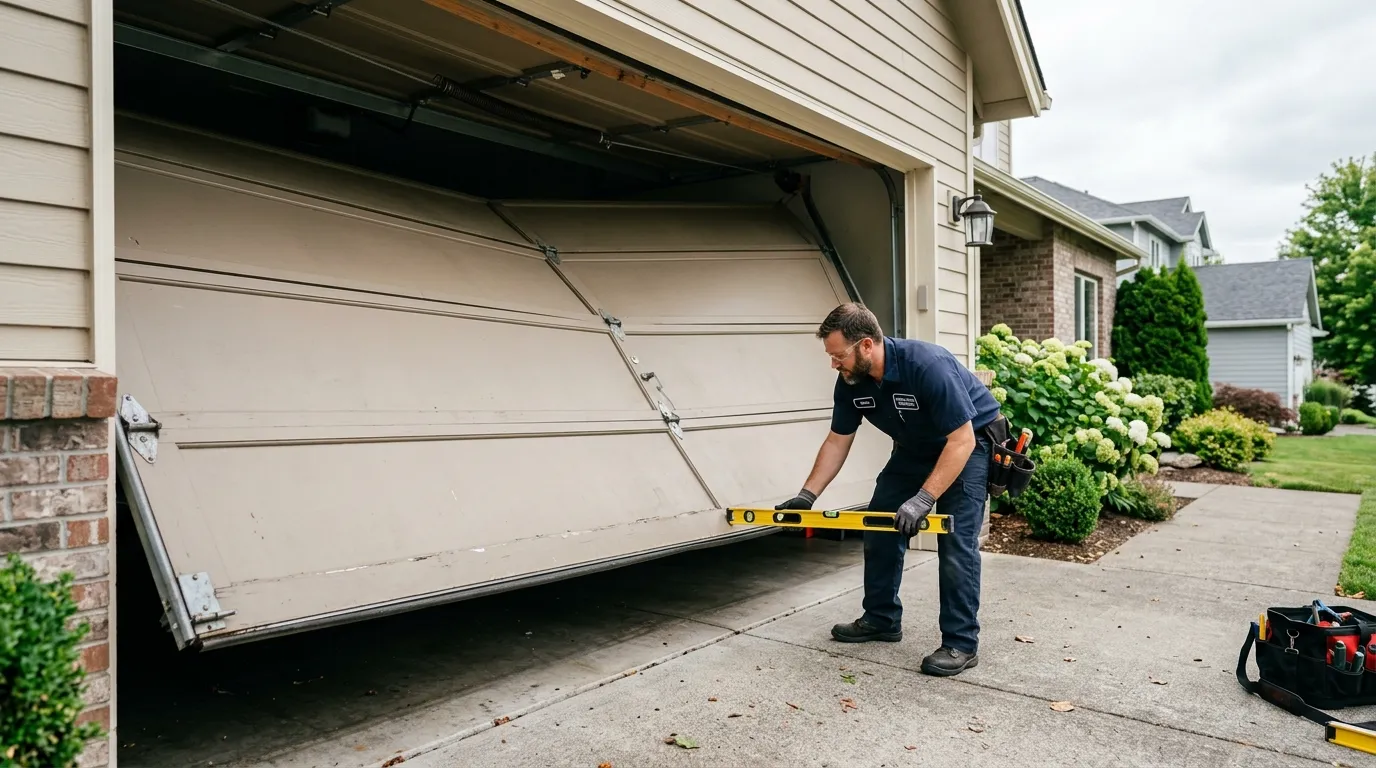
Other times it's slower: the door starts sagging on one side, or the remote works from ten feet away but not from the driveway.
With the housing stock here mostly 2000s-era construction across the neighborhoods we serve, the failure pattern is consistent. Galvanized torsion springs from that build era were sized for a 7-10 year cycle life under average use, and twenty-plus years on, a lot of them are past due.
Owners don't find out a spring is past due until it snaps on a cold morning when the metal is least forgiving. We don't treat every noisy door as an opener problem just because the remote is what the homeowner touches first.
DIY or pro
You can watch a video and replace a set of rollers yourself, and plenty of people do. Here's where DIY makes sense, and where it puts people in the ER.
You can watch a video and replace a set of rollers yourself, and plenty of people do.
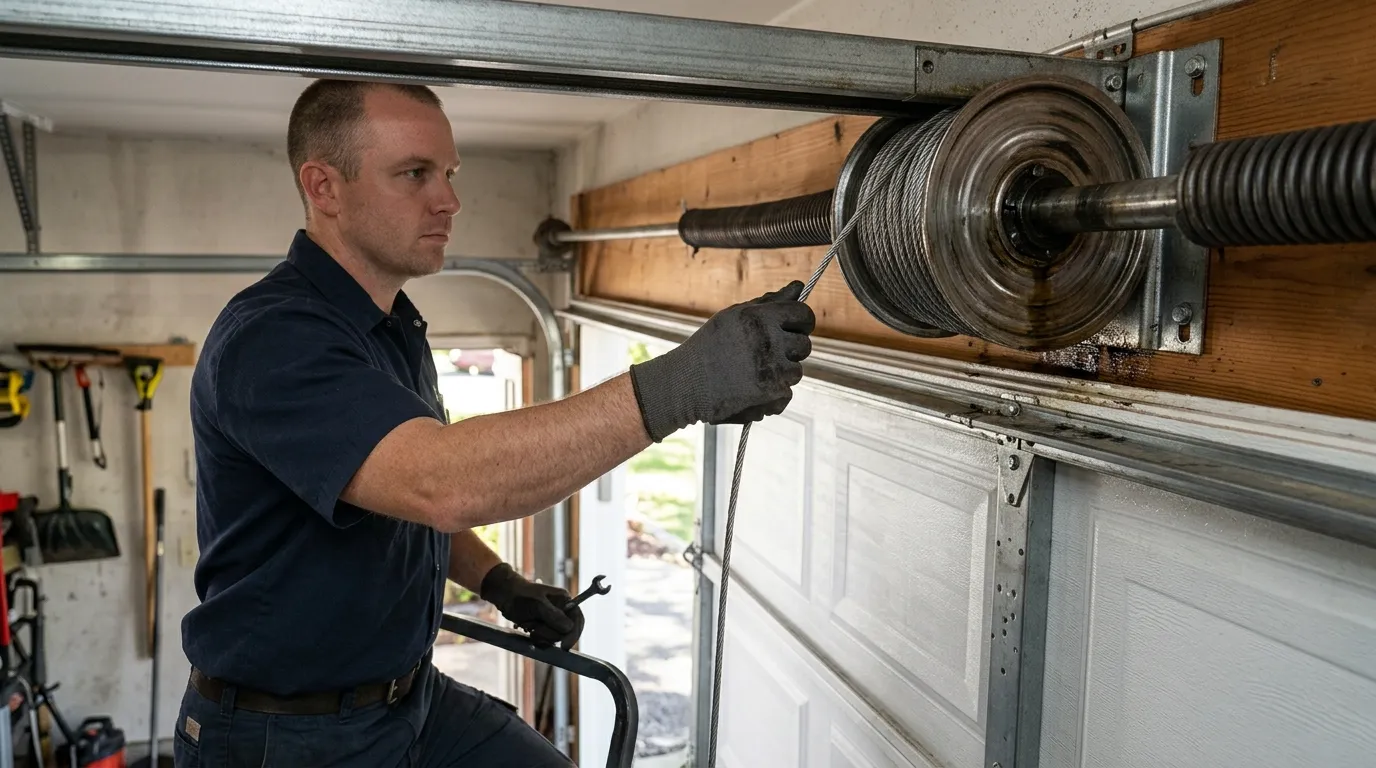
Touching a wound torsion spring under tension isn't caution talk - it's the one job in this trade that puts people in the ER. If your door won't move and you can see a gap in the coil above the door, leave it alone and call someone.
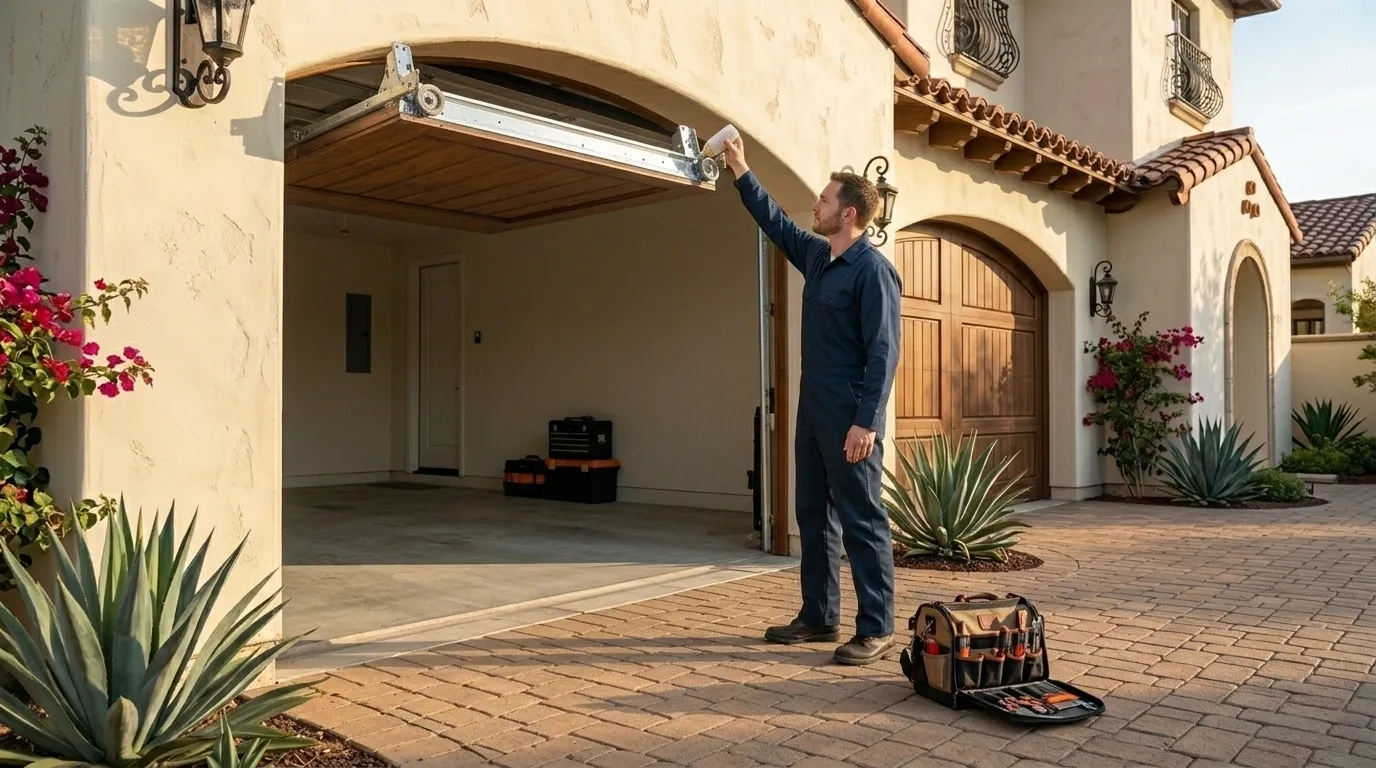
Lubricate hinges and rollers twice a year, tighten loose bolts on the track brackets, and check that the photo-eye sensors near the floor are aligned and not caked in yard debris. Charlotte's cold-moderate climate means enough temperature swing through the year that hardware loosens and lubricant dries out faster than a lot of owners expect - a five-minute check twice a year catches most of that before it becomes a service call.
Local causes
Two things stack up here. First, the age spread - housing built 1967 through 2011, median 2001 - means a large share of doors in this service area are carrying original or first-replacement hardware that's aging out at roughly the same time. We're not chasing one bad batch of springs; we're seeing an entire housing generation hit its service window together, which is why demand clusters the way it does.
Second, the climate band. Charlotte sits in a cold-moderate zone - not the deep freezes that snap steel outright, but enough seasonal swing that metal fatigues faster than in a truly mild climate, and enough humidity swing to gum up lubricant on tracks that haven't been serviced in years. A door in a warm, dry climate with the same install date usually has a few more years left in the spring. Here, the swing works against the hardware every season, which is the real reason service calls in this metro trend toward spring and opener failures rather than, say, panel rust or foundation settling issues you'd see elsewhere.
One limit worth naming: if a door's track is bent beyond a certain point or the section panels are cracked from age, we'll tell you replacement beats repair. We don't stretch a repair just to avoid that conversation.
Questions
Most torsion springs on Charlotte homes built in the 2000s are rated for 7-10 years of average use. If your house falls in that 1967-2011 build range and the spring hasn't been replaced, it's worth having it checked rather than waiting for it to snap, since that usually happens without warning.
Yes. We're in a cold-moderate band, not extreme cold, but the seasonal temperature swing still fatigues spring steel and dries out track lubricant faster than a stable, mild climate would. It's a slower wear pattern than deep-freeze regions see, but it adds up over the two-decade-plus life of a typical door here.
We don't recommend it. A wound torsion spring holds enough stored force to cause serious injury if it releases wrong. Rollers, weatherstripping, and sensor alignment are reasonable DIY jobs; the spring itself isn't.
We work across the metro, including Elizabeth, Dilworth, Myers Park, Cotswold, and out to Pineville, Mint Hill, Stallings, and Belmont, among other nearby communities.
Explore more
Ready when you are
Charlotte Garage Door Pros repairs and installs garage doors, springs and openers in Charlotte, NC and the surrounding area.