Uneven spring tension on rollups
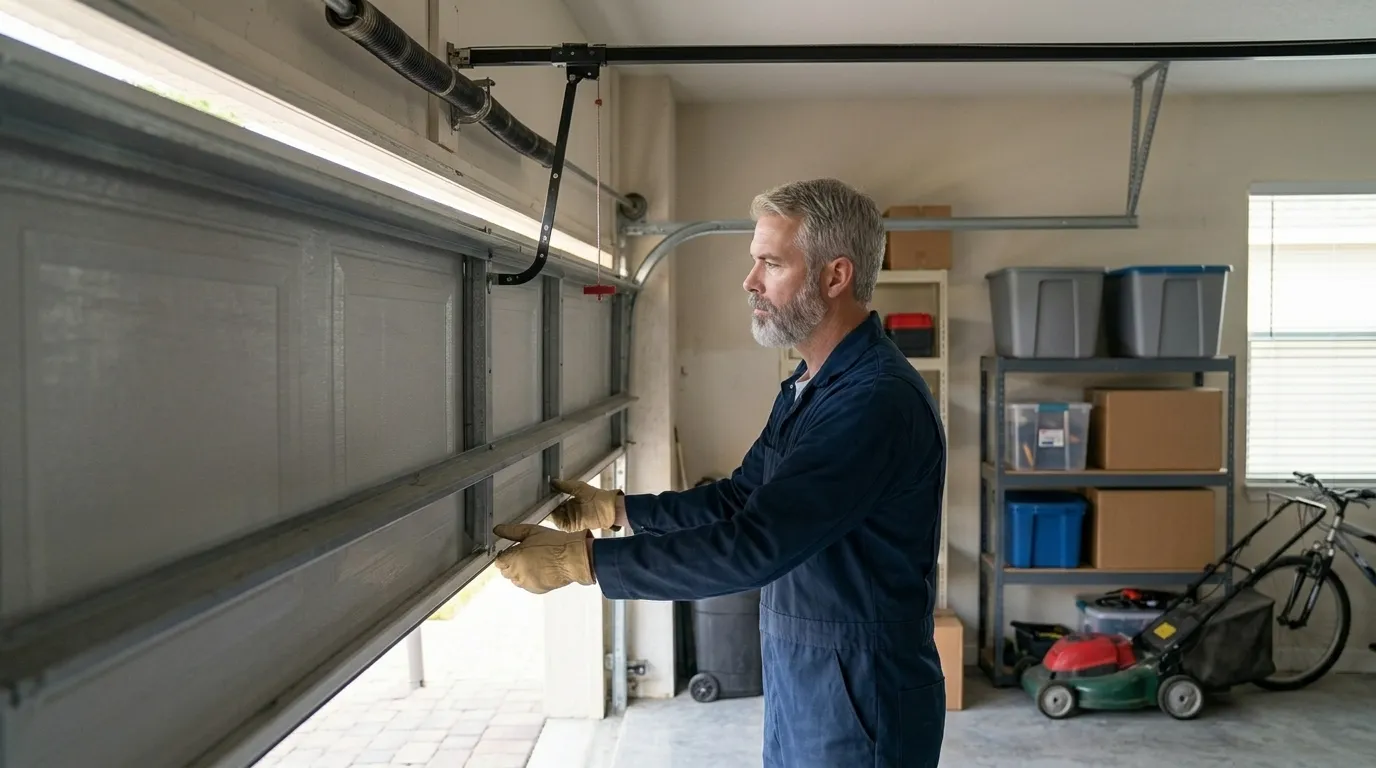
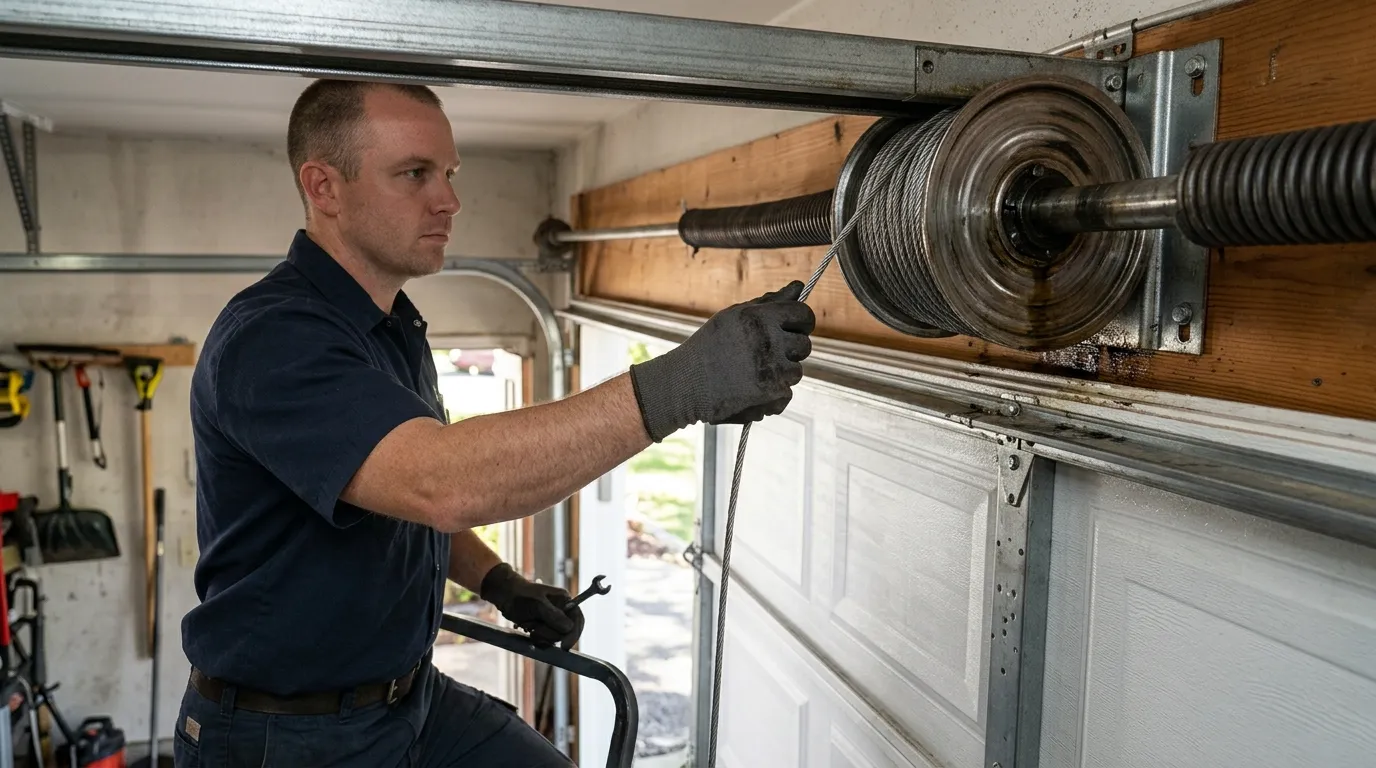
On steel rollup doors it's usually a torsion spring that's lost tension unevenly across a wide opening, which throws the balance and trips the opener's force sensor - showing up as a door that reverses on its own.
Charlotte, NC
Steel rollup and sectional door repair for warehouses, strip retail, and light-industrial buildings across the Charlotte service area, from Pineville to Davidson.
Job timing
Commercial calls in this area run different from a homeowner's double door - a rollup, a sectional retail door, and a high-cycle opener each have their own failure pattern. Here's how a typical service visit runs, across the whole area we cover from Pineville to Unionville.
A 12-foot steel rollup on a warehouse dock, a sectional door on a strip retail unit, and a high-cycle opener that's run three shifts a day for a decade each have their own failure pattern and their own parts sourcing, so we start by identifying exactly what we're working on.
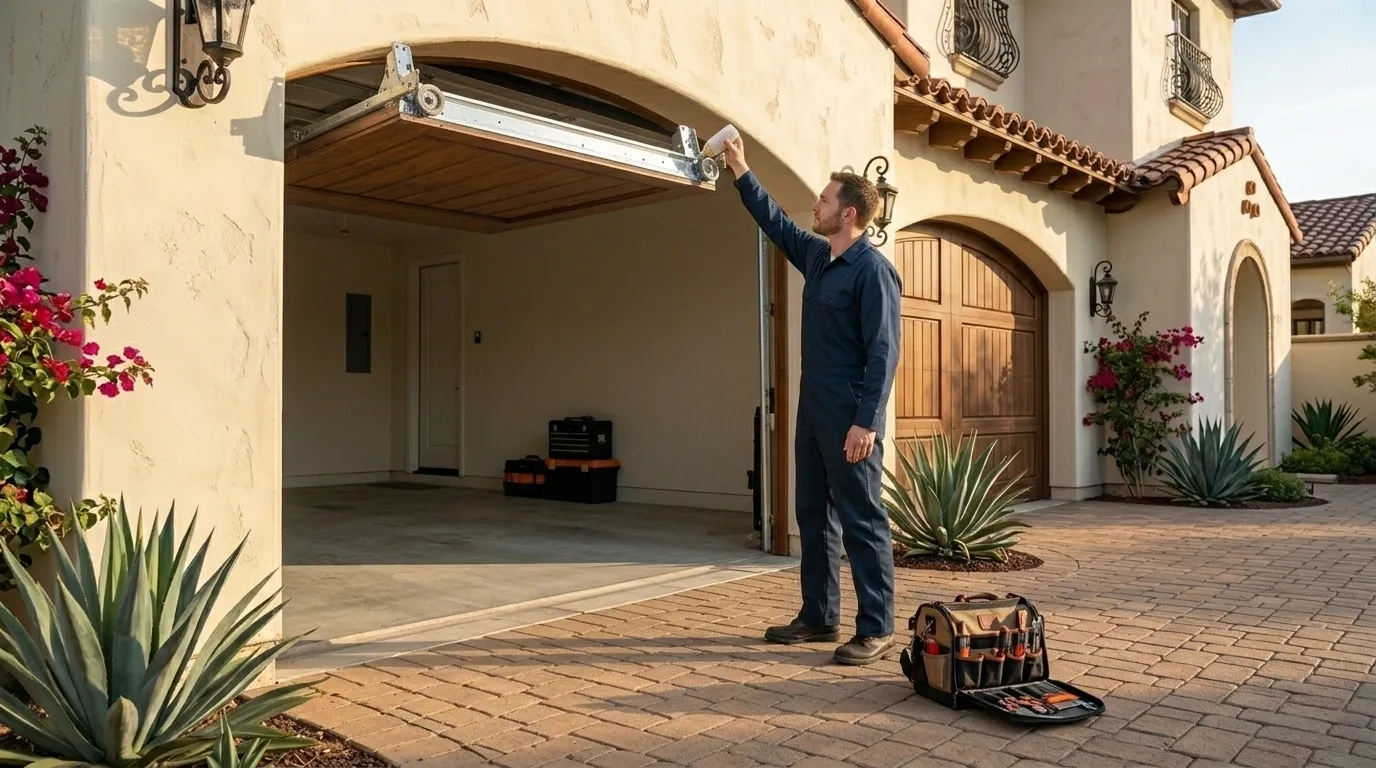
A tech on site measures spring wire gauge, checks track plumb, and identifies the panel or cable that's actually failed rather than swapping the whole assembly on a guess. Commercial doors see heavier daily cycles than a household garage, so wear shows up faster.
We work the whole service area covered by this page, from Pineville nine miles out to Unionville twenty miles off, plus the near-in commercial corridors around Dilworth, Cotswold, and Ashley Park - which matters since a property manager with buildings in more than one area is often calling about more than one door.
We schedule around a business's open hours where we can, but a door that's stuck open or stuck shut on a loading dock doesn't wait for a slow afternoon, and we treat it that way - the window between 'it's rattling' and 'it's down' is shorter on a commercial door.
Symptoms
The complaint we hear most from commercial accounts is a door that reverses on its own or slams down and won't lift past a foot. Here's what's usually behind it, on both rollup and sectional commercial doors.
On steel rollup doors it's usually a torsion spring that's lost tension unevenly across a wide opening, which throws the balance and trips the opener's force sensor - showing up as a door that reverses on its own.
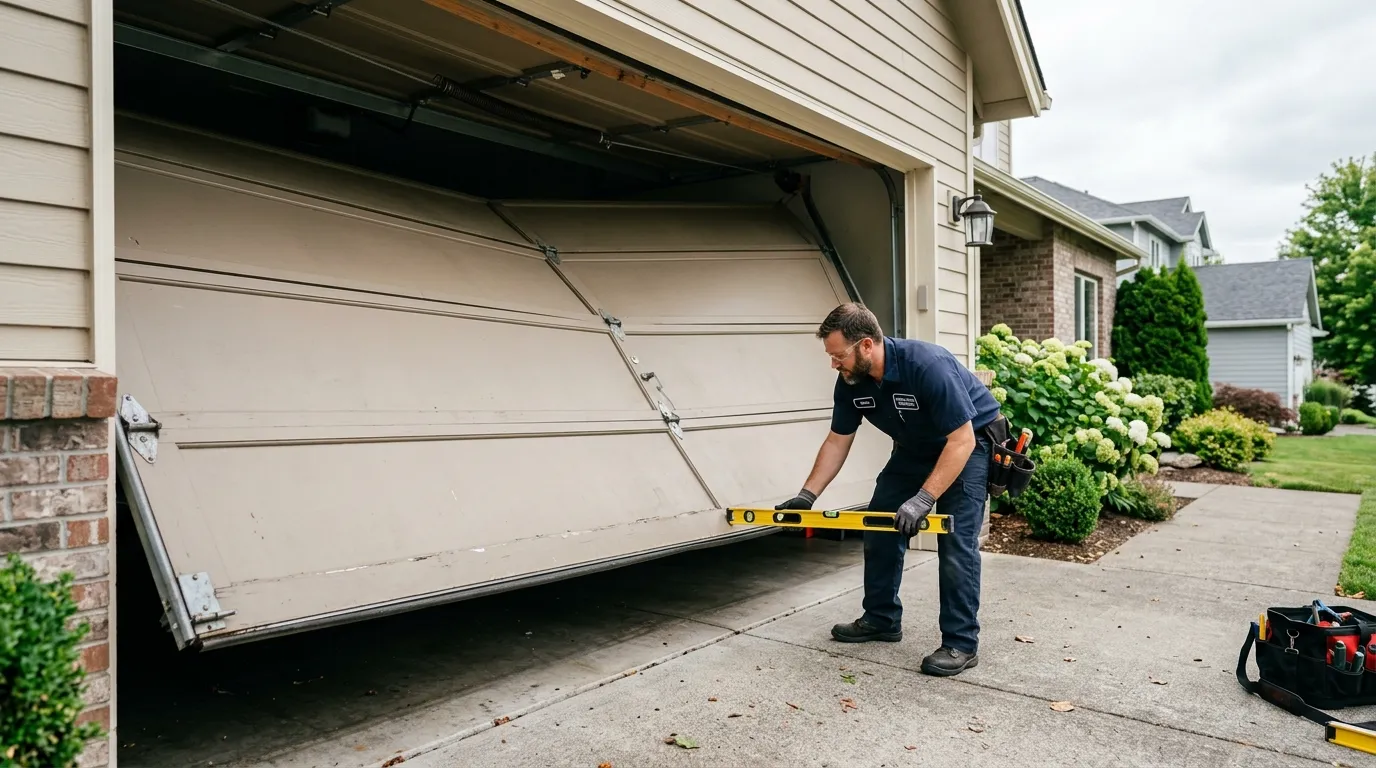
On sectional commercial doors the reversing or slamming complaint is more often a broken roller bracket or a bent track rail from a forklift or truck clipping it on the way in.
Charlotte sits in a moderate-cold climate band, and the seasonal swing loosens lag bolts on track brackets and stiffens door lubricant - a rollup that ran fine in July can bind in January on the same hardware. We see it cluster twice a year, spring and fall.
A door that only sticks on cold mornings and frees up by afternoon is telling you it's a lubrication and alignment issue, not a spring failure yet - but it won't stay that way if the bracket keeps working loose.
DIY or pro
A business owner with a stuck rollup is tempted to prop it, wedge it, or tighten what looks loose. Here's what's actually safe to do yourself, what isn't, and one honest limit on our end.
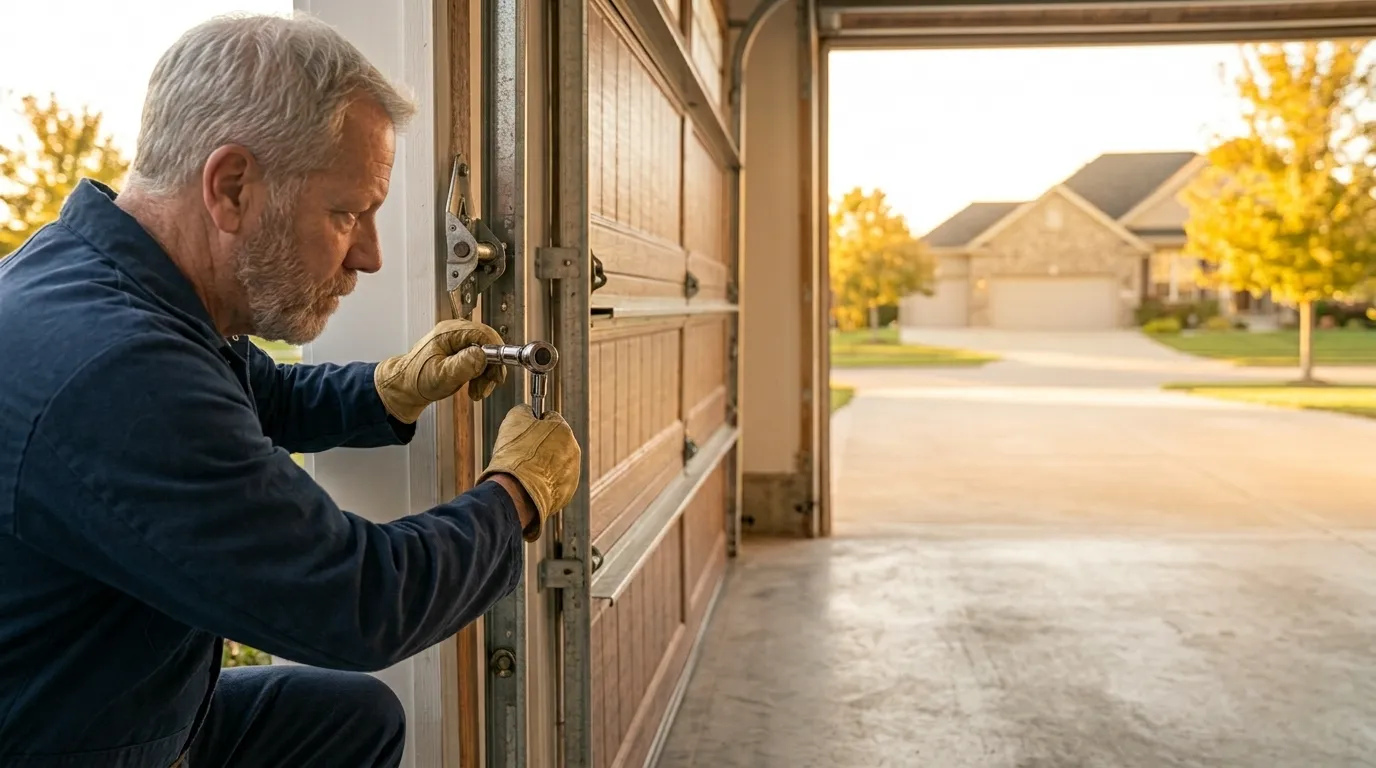
Clearing debris from the track or spraying a light lubricant on rollers won't hurt anything, and it's a reasonable first step for a maintenance person to try before calling.
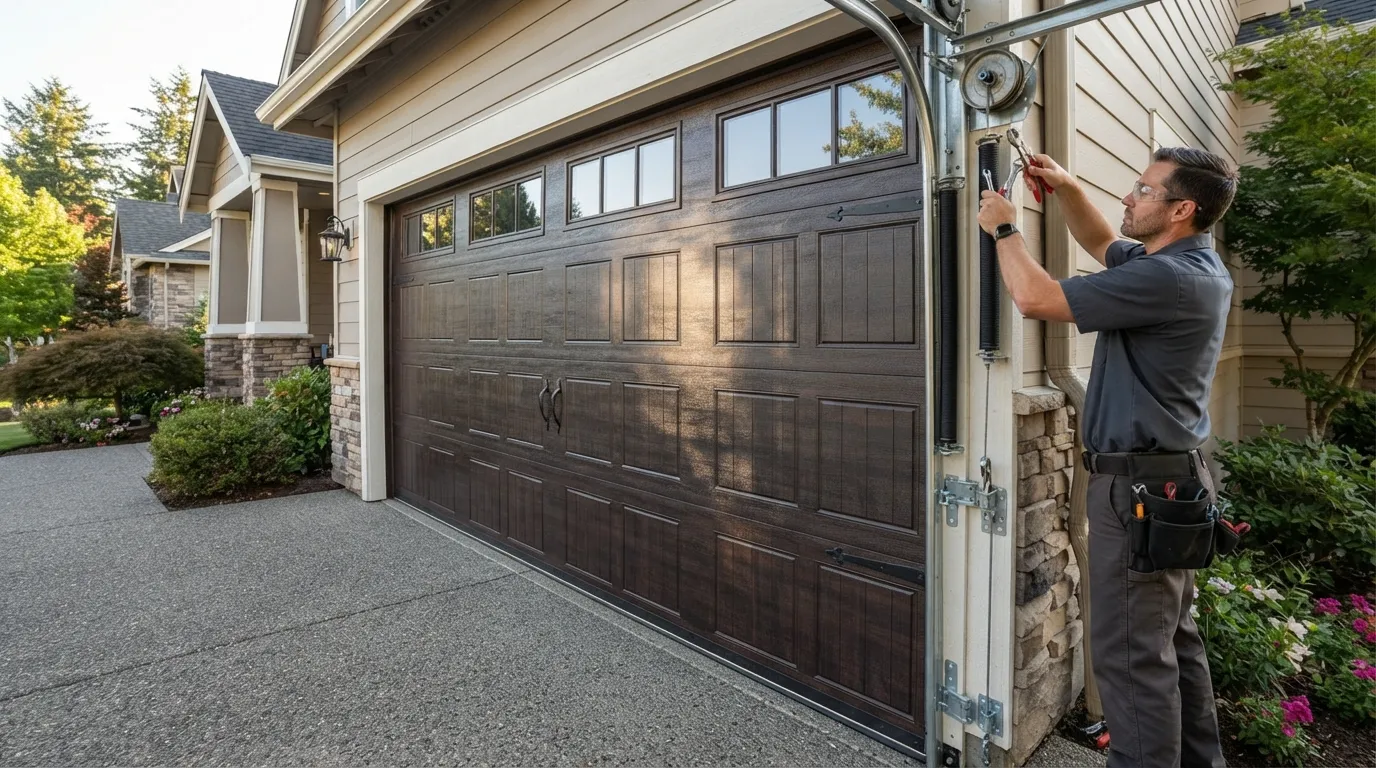
A spring under load on a 12 or 14-foot commercial opening carries enough stored force to break a wrist or worse, and it's not a job with a safe amateur version, unlike a lot of household repairs.
Running a door on a tripped opener sensor by disabling the safety reversal is the one shortcut that turns a repair call into an insurance call. If a door won't lift, won't stay down, or reverses without contact, that's a call, not a DIY afternoon.
We don't stock every commercial opener control board on the truck, since there are enough different systems in use across this many properties that a same-day board swap sometimes waits on a part.
Local causes
Housing across this area went up mostly between 1967 and 2011, with the heaviest concentration built in the 2000s, and the commercial and light-industrial buildings that filled in around that same growth carry a lot of the same door hardware from that build-out era. With 83,123 households and 57,865 owner-occupied houses in the service area, there's a large base of commercial and mixed-use structures put up on similar timelines, which means a lot of torsion springs and track hardware are hitting the same age window at once. Median household income here runs $94,390, high enough that most commercial accounts choose a proper repair over a stopgap, which is the right call on a door that's cycling dozens of times a day. The moderate-cold climate band is the other half of it: this isn't a region that gets hard freeze-thaw damage to concrete slabs the way a colder market does, but the repeated swing through the 40s and 50s degrades lubricant and loosens fasteners in a way a steady-cold or steady-warm climate wouldn't. That combination - aging commercial hardware plus a climate that never settles into one seasonal state - is why the same failure modes keep showing up across this whole area rather than in one isolated spot.
Questions
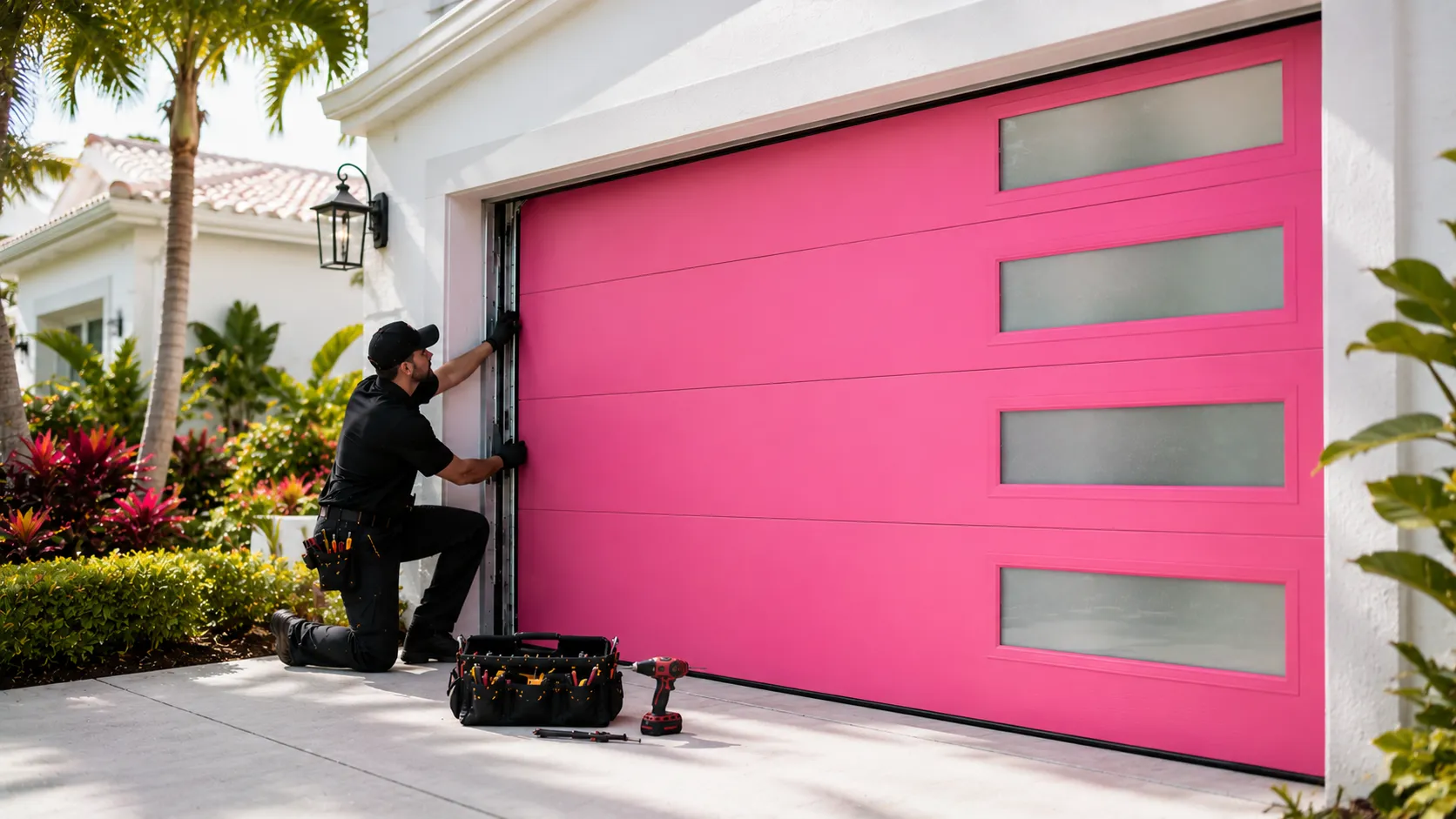
Yes. Rollup doors on loading docks and warehouses have different spring and track hardware than a sectional commercial door, and we carry parts and tension gauges for both. The diagnosis differs - rollup tension is usually the spring, sectional binding is usually the track or a roller bracket - but we handle either type.
This page covers the full service area, which runs out to towns like Pineville, Mint Hill, Belmont, and as far as Unionville at twenty miles. If your property sits within that range, we take the call; each of those areas also has its own page with more local detail.
That's the climate swing, not a broken part yet. Charlotte's moderate-cold band means temperatures move through a wide middle range rather than staying near freezing, and that repeated expansion and contraction of steel hardware loosens brackets and thickens lubricant. Left alone, it usually turns into a bracket or spring failure.
Clearing the track and lubricating rollers is fine to do yourself. Adjusting spring tension or bypassing a safety sensor on a commercial door is not - the stored force in a torsion spring on a wide commercial opening can cause serious injury, and it's not a repair with a safe shortcut version.
Explore more
Ready when you are
Charlotte Garage Door Pros repairs and installs garage doors, springs and openers in Charlotte, NC and the surrounding area.