
Delaminating panels
A panel that's delaminating from thirty-plus years of humidity swings is a common trigger - once the layers separate, patching doesn't hold for long.
Charlotte, NC
Charlotte homes span 1967 to 2011 construction, so garage door sizing and insulation needs vary block to block. We install doors matched to your house's actual era.
Job timing
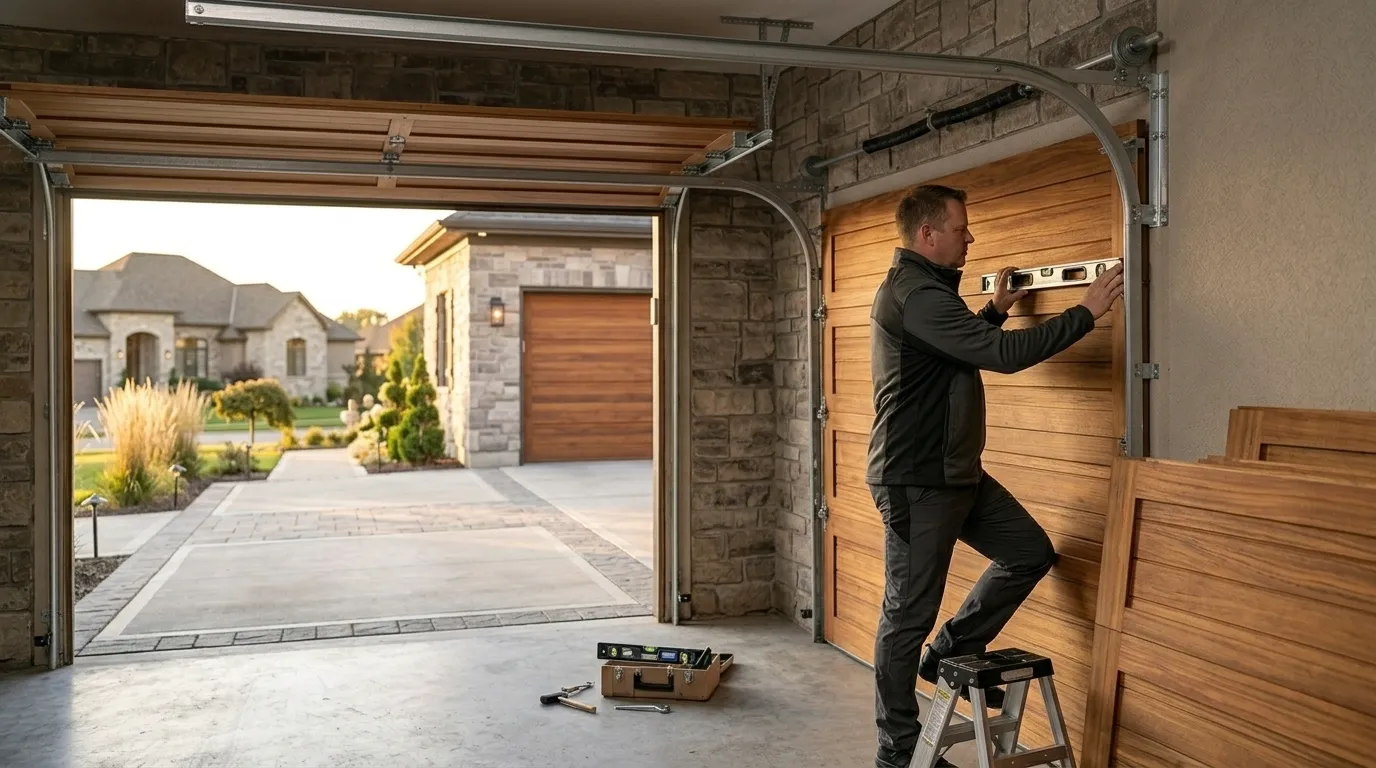
A straight swap on a standard 16-foot double door usually runs a few hours start to finish, but what stretches a job in Charlotte is the house itself. Here's how a typical installation call unfolds.
A straight swap on a standard 16-foot double door, same opening, same track path, usually runs a few hours start to finish.
Housing stock here runs from 1967 up through 2011, with a median build year around 2001, and that range covers three or four different eras of garage door hardware. A door on a 1970s house in Elizabeth or Dilworth was likely set with different jamb depth and header clearance than a 2000s build out past Cotswold or Foxcroft.
When the opening doesn't match a current-stock door size, we're cutting jamb, resetting track brackets, or rebuilding the header - and that's what turns a half-day install into a full one.
We measure the actual opening before we quote, not the nominal size stamped on the old door, because those two numbers disagree more often than homeowners expect.
Symptoms
Most installation calls don't start with someone wanting a new door - they start with a door that's failing to do its job. Here are the triggers we see most often.
A panel that's delaminating from thirty-plus years of humidity swings is a common trigger - once the layers separate, patching doesn't hold for long.
A single-layer steel door with no insulation, cold to the touch all winter, that never should have been paired with a heated bonus room above the garage, is another common candidate for replacement rather than repair.
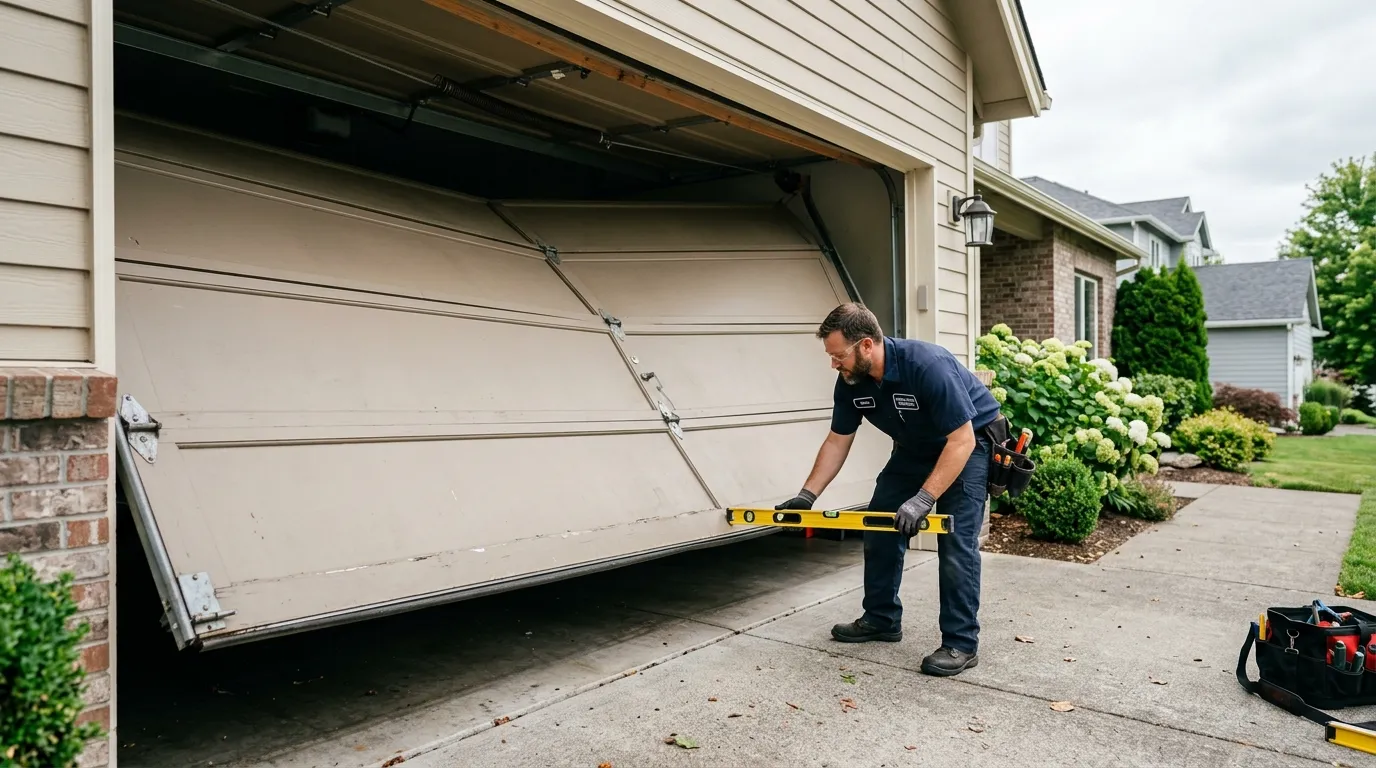
Sections that don't sit flush anymore because the track was never plumb to begin with can't be fully corrected without addressing the door and track together.
On the 2000s-era stock that makes up most of this area, the more common trigger is an opener or spring system that's outlived the door itself. By the time someone calls, the door isn't a repair candidate anymore - it's costing more in patch jobs than a new install would.
DIY or pro
Big box stores sell garage door kits, and on paper the install looks like a weekend project. Here's where that goes wrong in practice.
In practice, most Charlotte openings don't match the stock sizing those kits assume, especially on anything built before the 2000s.
Get the header height or jamb depth wrong and you end up with a door that binds under its own weight - a real problem on double doors, which run heavy enough that a torsion spring miscalibrated by even a few turns can put someone in the ER.
We don't recommend DIY install on anything beyond a single lightweight door in a garage you've already confirmed is standard-sized. Anything else, the labor savings don't cover the risk - that's not a sales pitch, it's the same install run enough times to know where it goes wrong.
Local causes
Charlotte's housing stock spans 1967 through 2011, and most of what's on the ground now dates to the 2000s boom - but that still leaves a lot of older doors mixed into newer neighborhoods, especially closer to the center city areas like Third Ward and First Ward where infill and renovation sit next to original construction. A cold-moderate climate means winter temperature swings are real but not extreme, so insulation matters for comfort and condensation control, not for surviving hard freezes. That combination - mixed-era openings plus a climate that punishes uninsulated steel with condensation rather than cracking - is why a generic, off-the-shelf install misses so often here. A door sized for a 2005 spec home doesn't sit right in a 1975 opening, and a bare single-layer door doesn't hold up against the moisture swings this area actually sees. We install to the opening in front of us, not to a national average.
Questions
If the panels are cracked, delaminating, or the door is single-layer steel with no insulation, repair usually just delays the same call. If it's a broken spring or a bent track on an otherwise sound door, repair is the right move. We'll tell you honestly which one you're looking at before we quote anything.
Not always without adjustment. Charlotte homes range from 1967 to 2011 construction, and older openings often don't match current stock door sizes. We measure the actual opening, not the nameplate size on your existing door, and account for jamb or header work in the quote up front.
It depends on what's above and beside your garage. In a cold-moderate climate like this one, insulation mainly helps with condensation and comfort in an attached garage with living space nearby, rather than protecting against hard freezes. For a detached garage with no adjoining rooms, it matters less.
Explore more
Ready when you are
Charlotte Garage Door Pros repairs and installs garage doors, springs and openers in Charlotte, NC and the surrounding area.