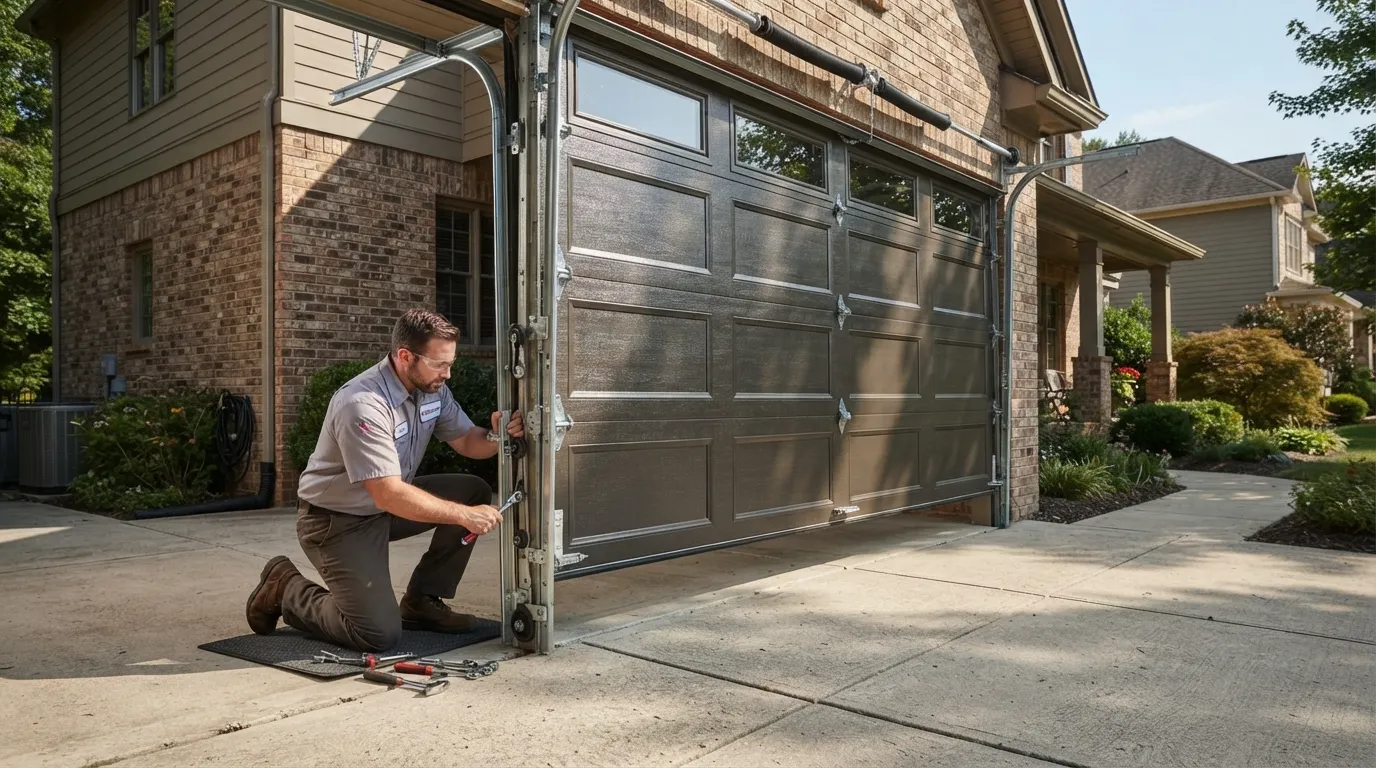
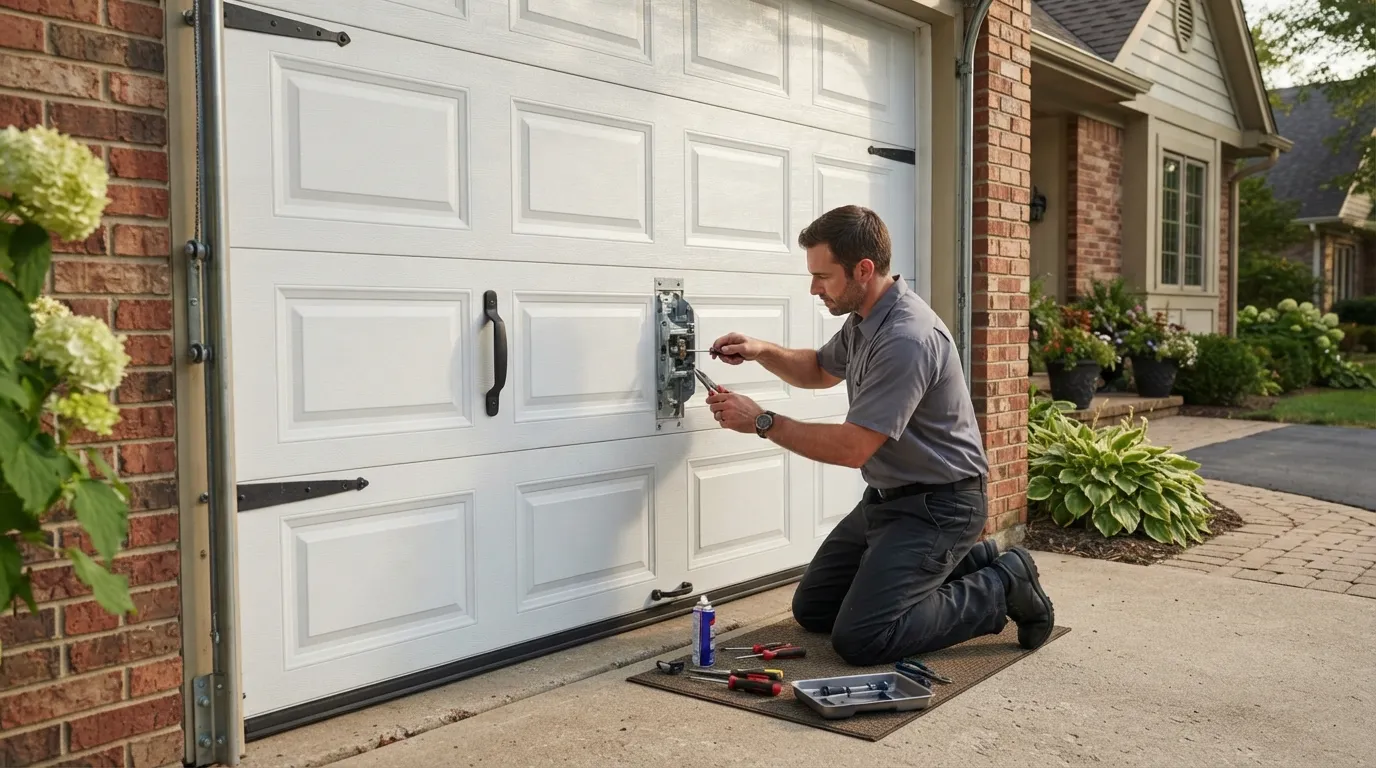
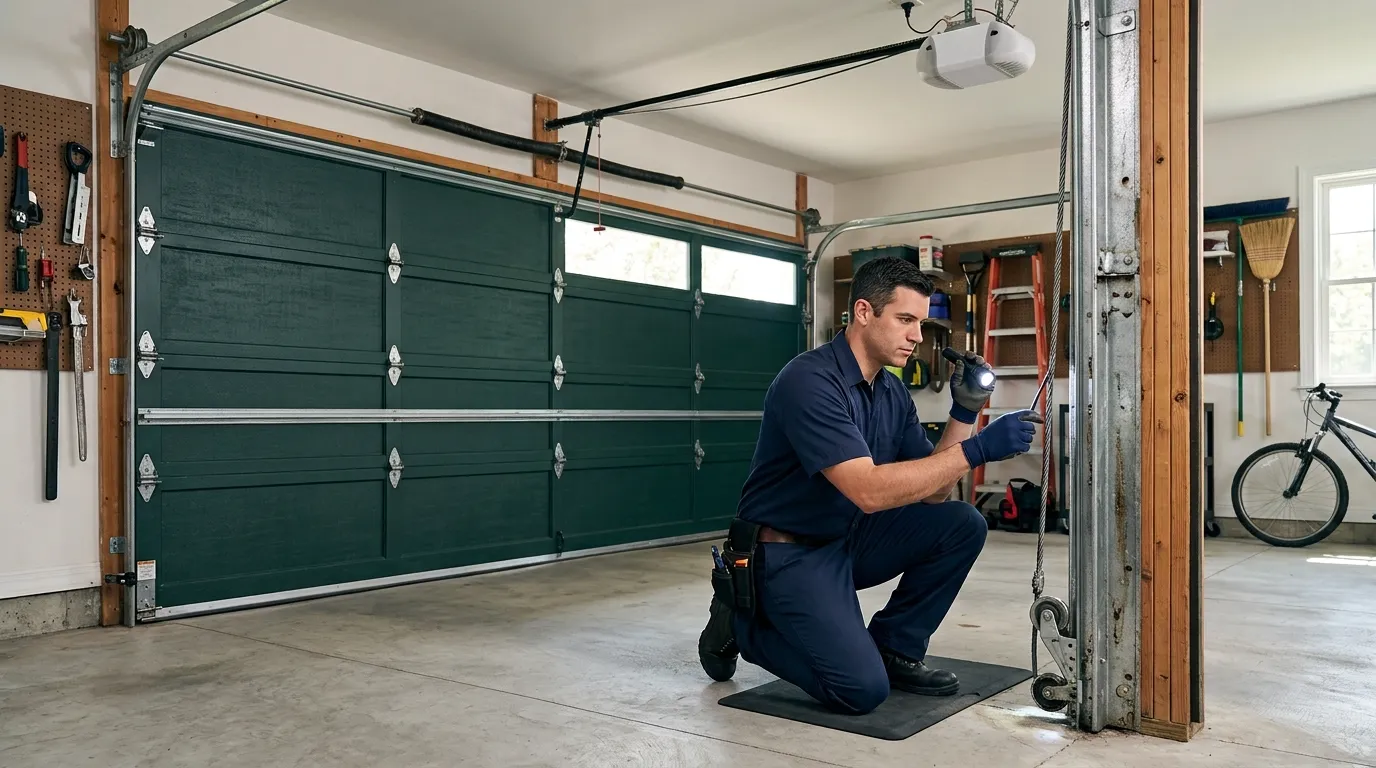
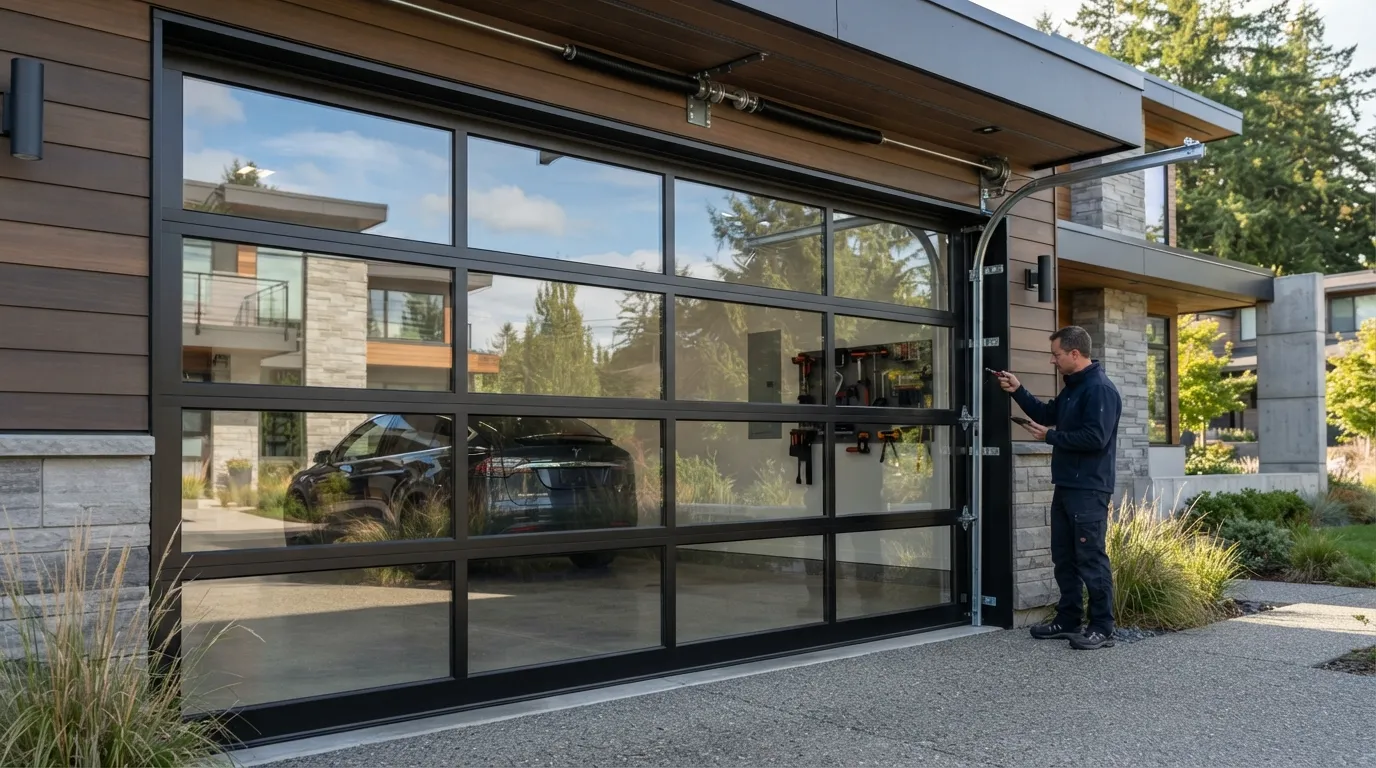
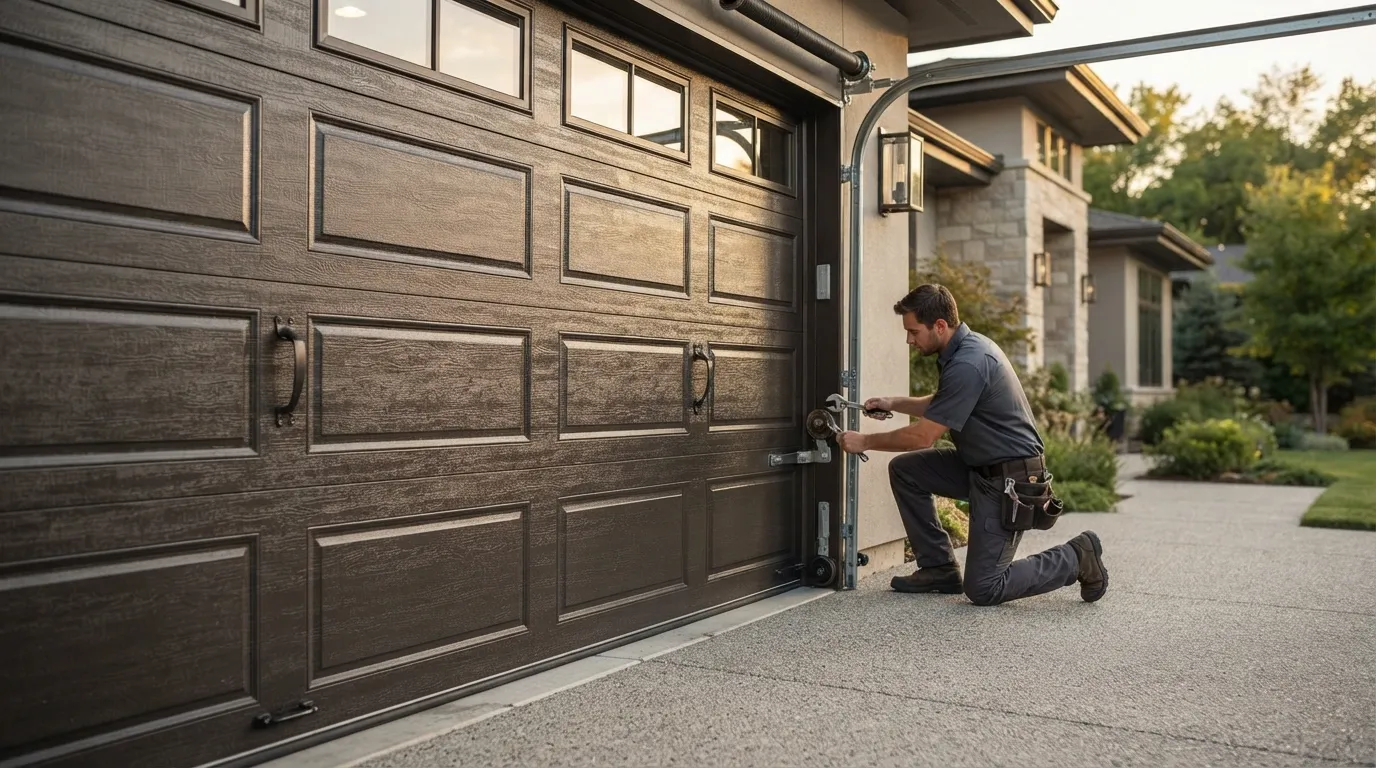
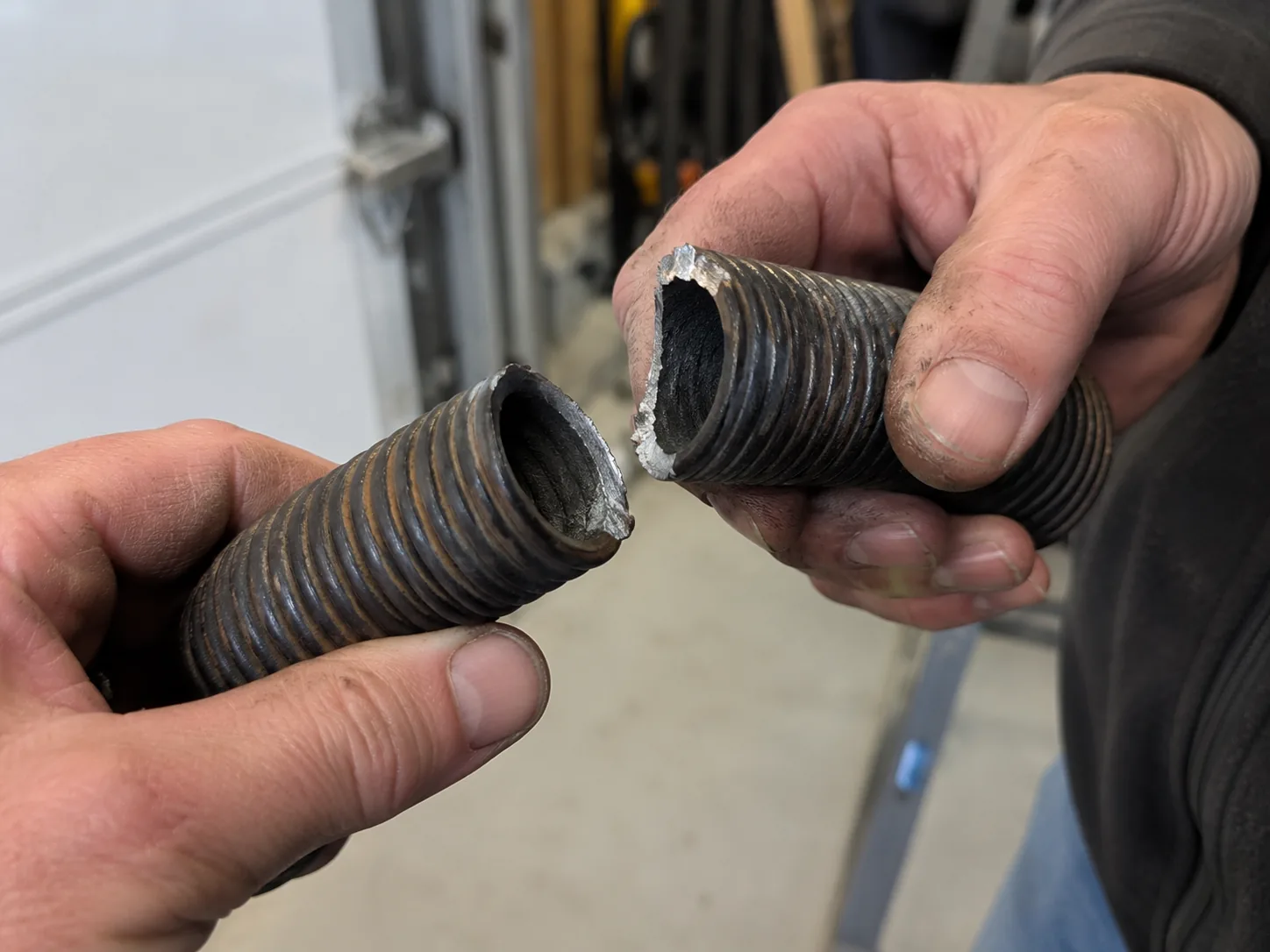
Mint Hill's roughly 10,194 households sit in a slightly higher income bracket than the service area average - $99,272 median here against $94,390 across the wider territory. In practice, that shows up as more owners choosing a matched panel replacement over a full door swap when only one section is damaged, since the newer doors here are more likely to still have parts in production.
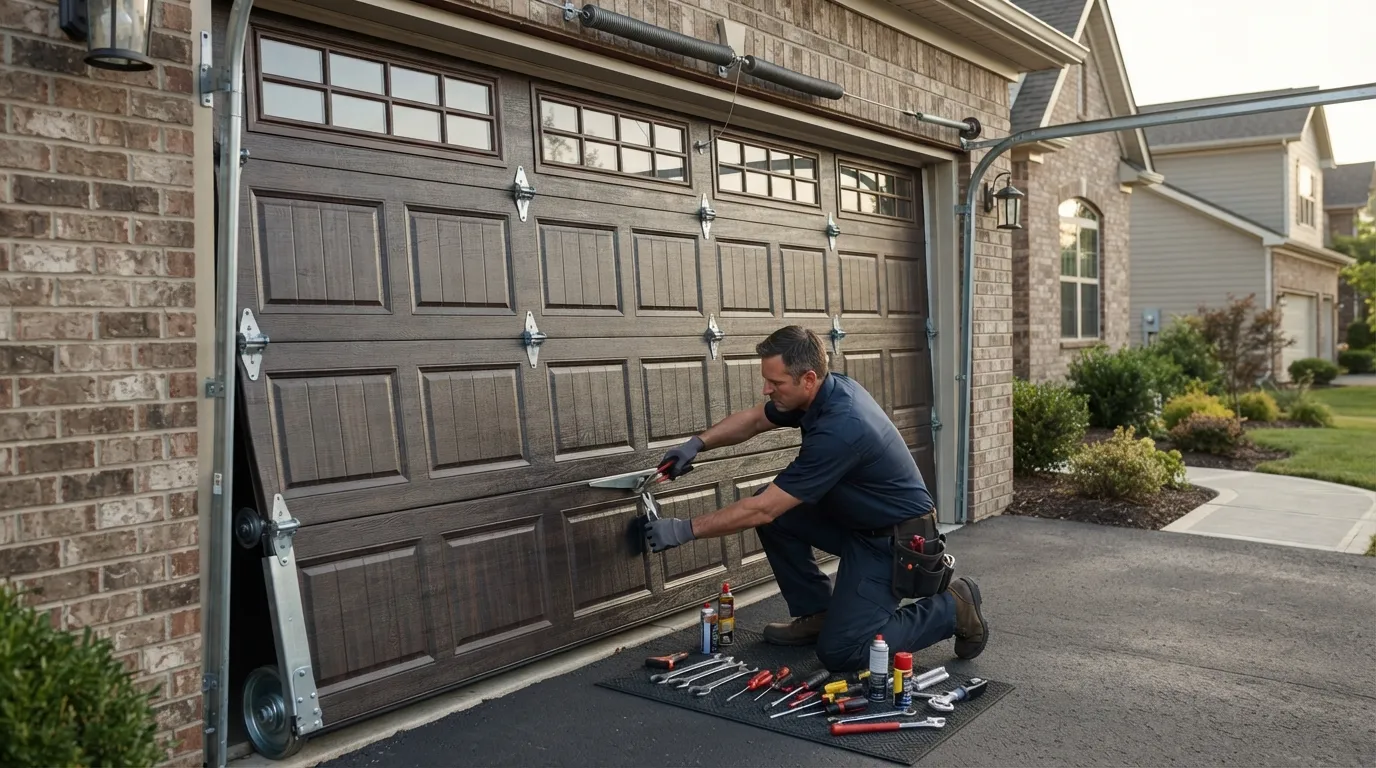
The failure pattern itself is mechanical, not economic, though. A 1991-era steel panel takes a hit - a car bumper, a basketball, a wind-driven branch - and the section buckles inward at the seam rather than cracking straight through, because the foam core holds its shape longer than the steel skin does. That's different from what you'd see on an older flat-panel door, which tends to dent and stay dented without buckling. Recognizing which failure you're looking at tells the tech whether a single-section swap will sit flush against its neighbors or whether the whole door's alignment is now off enough that more than one panel needs to come out.