
Guide
Why Garage Doors Slip Off Track Around Charlotte
Charlotte homes built between 1967 and 2011 have hardware that ages differently by decade. Here's why doors here jump track and what the fix usually costs.
Local detail
The Cost of This Job
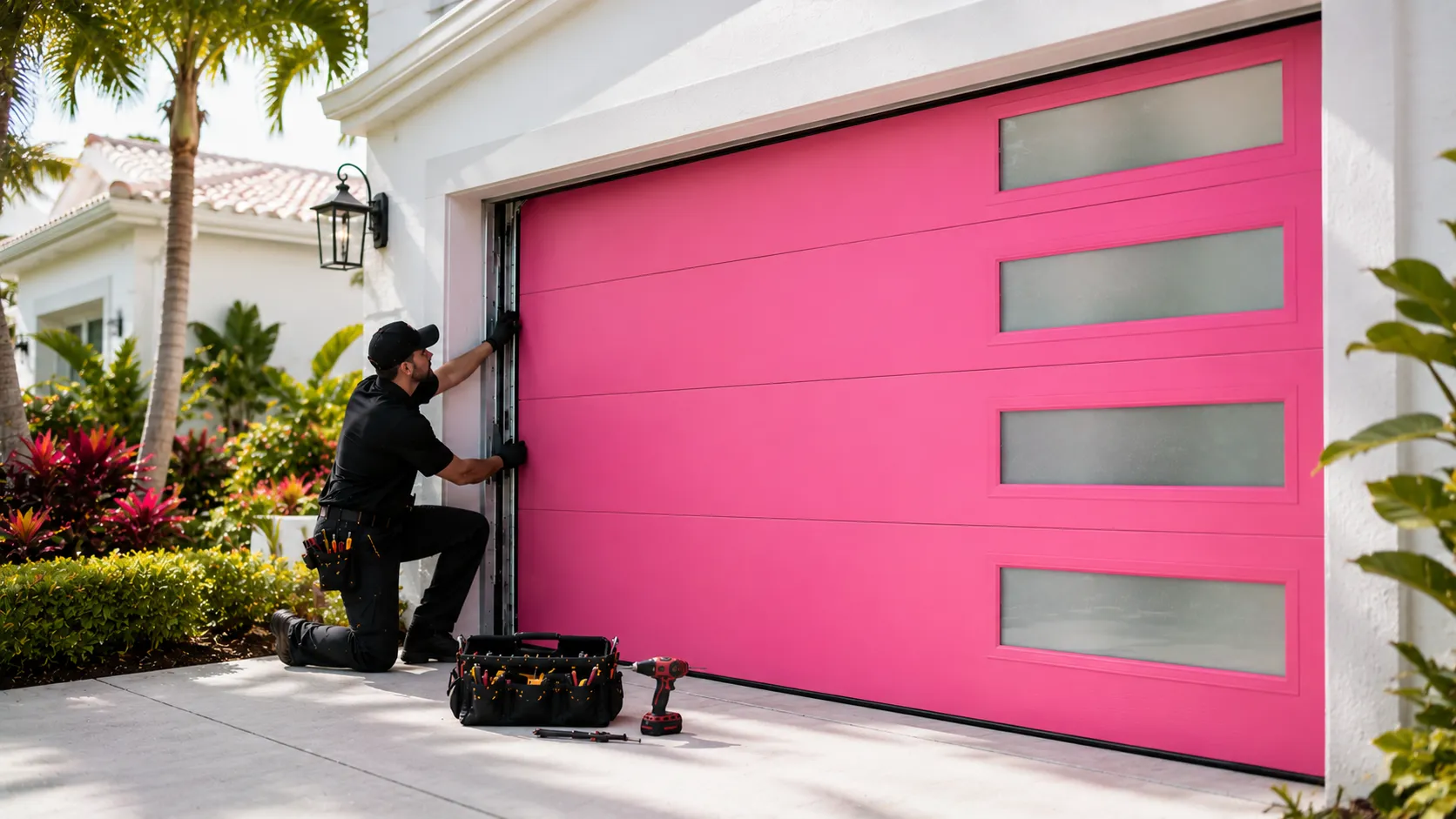
We don't post a flat number here because the fix depends entirely on what's bent and how old the hardware is. A door that jumped the track on a house built in the late 1960s often has a steel track riveted to a wood jamb, and once that rivet pulls loose, you're replacing the bracket, not just bending the track back. A door in one of the newer 2000s-era subdivisions usually has a heavier-gauge track on a sturdier stud mount, so the same jump might just need realignment and a roller swap.
With median household income here at $94,390, most owners in this area ask us to fix it right the first time rather than patch it twice, and that changes which parts we bring on the truck. The honest limitation: we can't quote a price over the phone for a track problem, because "off track" covers everything from a $40 roller to a full track-and-bracket replacement, and we won't guess at that without seeing the bend, the mounting surface, and whether the spring took any of the load when it happened.]}
The area
Where People Go Wrong
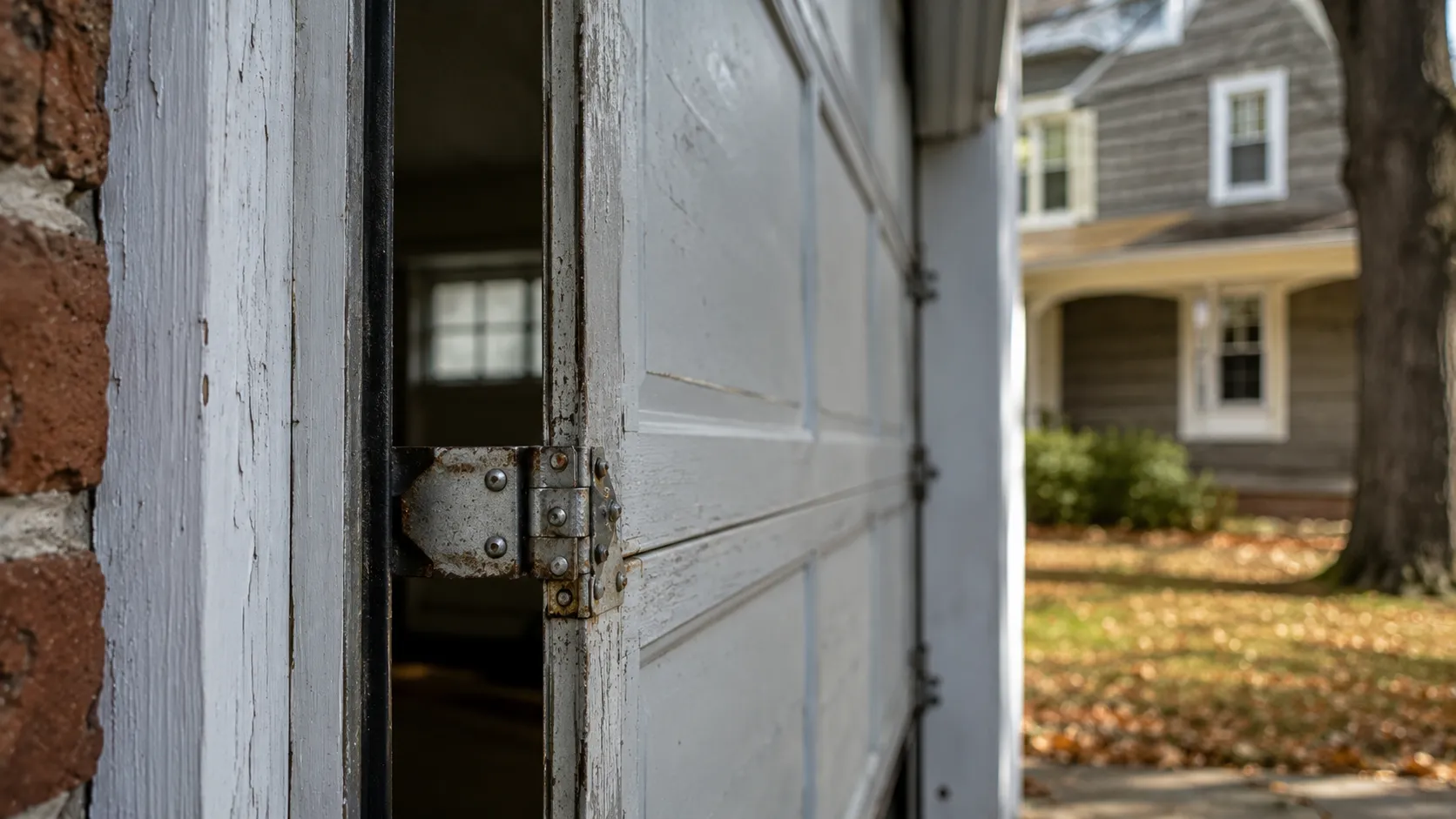
The single most common mistake we see is someone trying to force the door back down after it jumps, either by hand or by holding the wall button. That torques the track further out of parallel and can pop a second roller loose on the other side. The second mistake is specific to how much of this area was built: a lot of Charlotte's housing dates from 1967 to 2011, which means a wide mix of bracket styles, and a homeowner who watches an online video and buys a universal bracket kit often gets one that doesn't match the stud spacing on a house from that older end of the range.
Third, people tighten the track bolts without checking that the track is still plumb first, which just locks the misalignment in place. If a door has jumped track more than once in a year, tightening bolts harder isn't the fix, something upstream, usually a bent track section or a worn hinge, is doing it again.
What we find
What the Weather Here Does to It
Charlotte sits in a cold-moderate climate band, which means the tracks and hardware go through real freeze-thaw cycling every winter without the deep, sustained cold that would push everyone toward heavier-duty gear. That in-between pattern is actually harder on track alignment than a steady cold climate would be: the metal contracts on a cold night, the mounting screws in a wood jamb loosen a fraction, then a warm afternoon lets everything expand back, and over a few winters the track drifts out of parallel by degrees you can't see but the rollers can feel. Doors on the west or north side of a house, where the surface stays cold longer into the morning, tend to show stiff rollers and slight binding first.
This isn't a one-storm problem like a hurricane-zone town might have; it's a slow seasonal drift that shows up as a door that binds every winter and finally jumps the track when a roller catches at the wrong angle. Anyone who tells you the cold doesn't matter here because it's not that cold hasn't looked at how many of our track calls come in during the first hard cold snap of the year.
How we work
The Situation
This part of Charlotte covers a wide mix of building eras across the roughly 83,123 households and 57,865 owner-occupied houses in the area, and most of the 21 named neighborhoods we work in trend toward 2000s-era construction, with the overall housing stock running from 1967 through 2011 and a median build year around 2001. That spread matters for track hardware because a 2001-era house and a 1970-era house down the street can have completely different bracket systems even though they look similar from the driveway. Close-in areas like Dilworth, Myers Park, and Fourth Ward sit on the older end of that range, while neighborhoods further out lean newer.
Track problems don't respect those boundaries, though, an older bracket on a well-maintained door can outlast a newer one that was installed slightly out of plumb. If your door has started catching or popping a roller, the fix depends on which era of hardware you've got, not on a generic checklist.
Questions
Common questions
Why did my garage door suddenly jump the track after years of working fine?
Usually it's not sudden at all. A roller or bracket has been drifting slightly out of alignment for a season or two, often from the cold-moderate freeze-thaw cycling common here, and it finally caught wrong on one cycle. The door didn't fail overnight, it reached a tipping point.
Can I just push the door back onto the track myself?
You can sometimes get it back on the track, but forcing it while a spring is under tension is how people get hurt, and it usually re-seats the roller at the same bad angle that caused the jump in the first place. If it happened once, get the track checked before it happens again.
Does the age of my house affect what it costs to fix?
Yes. Houses here range from 1967 to 2011, and the bracket and track hardware from the older end of that range often needs different mounting hardware than what's stocked for newer builds. We check the mounting surface before quoting anything.
Is a bent track worth fixing or should I replace the whole door?
Depends on how bad the bend is and how old the rest of the door is. A single bent section on an otherwise sound door is usually a repair. A door with a bent track plus worn rollers, weak springs, and dented panels is often past the point where patching makes financial sense.
Ready when you are
Need a garage door sorted in Charlotte?
Charlotte Garage Door Pros repairs and installs garage doors, springs and openers in Charlotte, NC and the surrounding area.