
Guide
Weather Seals and Draughts: What Charlotte Homes Actually Deal With
How Charlotte's 2000s-era housing stock and cold-moderate winters wear out garage door weather seals, what it actually costs to fix, and where owners go wrong.
Local detail
The Cost of This Job
We can't quote you a number here without a look at the door, and we're not going to pretend otherwise. What we can tell you is what drives the cost in this market. Most of the housing across the Charlotte service area - the 21 named areas we work in - went up between 1967 and 2011, with a lot of it clustered around 2001.
That means the majority of doors we see are on original or first-replacement bottom seals, still fitted to tracks and retainer channels sized for that build era. A straight seal swap on a door with a clean channel is a different job than one where the channel's been bent by a mower blade or a car bumper over twenty years of use. Owner-occupied houses make up the bulk of the local stock - 57,865 out of 83,123 households - so most of what we quote is for people who plan to stay put and want it done once.
If your channel's bent, no seal we carry will seat flush, and we'll tell you that instead of selling you a strip that won't hold. That's the honest limit of what a seal replacement can fix.
The area
Where People Go Wrong
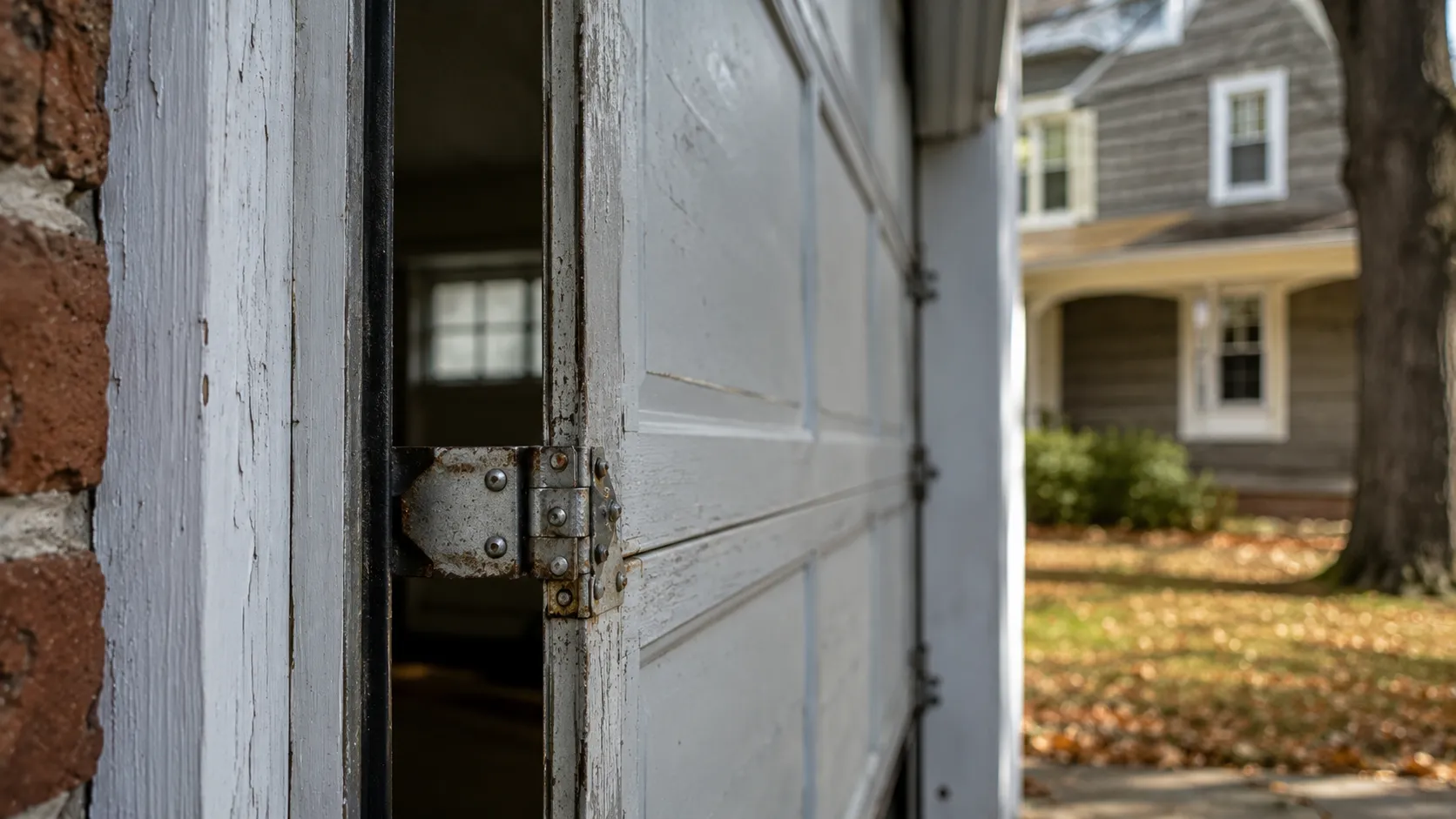
The most common mistake we see is buying a universal seal off a shelf and jamming it into a channel that doesn't match. Doors built during Charlotte's big 2000s construction wave often used a specific retainer profile, and a seal cut for a newer track will bulge, twist, or pop back out within a season. The second mistake is treating the draught as a seal problem when it's actually a level problem - a door that's racked slightly on its track will never seal evenly no matter what rubber you put under it.
We also see people caulk around the bottom seal instead of replacing it, which traps moisture against the slab and speeds up rust on the bottom panel. None of this is really about picking the wrong product. It's about not checking the track and the slab first.
A five-minute look at whether the door closes flush across its full width tells you more than the seal itself does. If the gap is only on one side, that's a hinge or a roller issue, not a weather-seal issue, and no amount of new rubber will close it.
What we find
What the Weather Here Does to It
Charlotte sits in a cold-moderate band - winters cold enough to stiffen and crack seal rubber, but not cold enough to keep it frozen solid for weeks at a stretch. That freeze-thaw cycling is actually harder on a seal than steady cold would be: the rubber contracts overnight, softens some during the day, and over a few winters that flexing turns it brittle at the edges first. On a lot of the 2000s-era doors common across this market, the bottom seal is the first thing to go because it's the part sitting closest to the slab, picking up ground-level cold and moisture both. Once it hardens, it stops flexing into the concrete apron and you get a visible gap at the corners before you get one in the middle.
That's usually the first sign an owner notices - draught along the bottom edges of the door, worse on one side than the other. We don't get the deep, sustained freezes that split seals into chunks, so the failure here tends to be slow hardening and shrinkage rather than sudden cracking. It still adds up to real airflow under the door by the second or third winter.
How we work
The Situation
Across the Charlotte service area, from the older in-town blocks like Dilworth, Elizabeth, and Myers Park out to newer stock nearer Indian Trail, Weddington, and Mint Hill, the door and seal situation tracks pretty closely with when the house went up. Median household income in the service area runs $94,390, which tells us most owners here are replacing seals as maintenance, not waiting until the door fails outright - that's the pattern we see in the calls we get. With 83,123 households and the majority owner-occupied, this isn't a rental-turnover market where seals get ignored until move-out.
People notice the draught, feel the heating bill move, and call before the seal is fully gone. That's the right instinct. A seal caught early is a straightforward swap; one left three or four winters past hardening usually means the bottom section of the door has started collecting moisture too, and at that point you're not just buying rubber, you're looking at the panel underneath it.
Questions
Common questions
How do I know if it's the seal or the door itself letting in draughts?
Close the door and look at the gap from outside at dusk with a light on inside the garage. If light or air comes through evenly across the bottom, it's likely the seal. If it's only on one side or one corner, that's usually a level or roller problem, not the weather seal, and replacing the seal alone won't fix it.
Does Charlotte's climate mean seals wear out faster than in a truly cold state?
Not exactly faster - differently. The freeze-thaw cycling we get in a cold-moderate band tends to harden and shrink seal rubber gradually over a few winters rather than cracking it suddenly the way a sustained hard freeze would. Owners usually notice slow gap growth at the corners before a full seal failure.
Can you match the seal to an older track without replacing the whole door?
Usually yes, if the retainer channel itself is straight. Most of the doors we see across this market date to the 2000s building wave and use a standard channel profile that current seal stock fits. If the channel is bent or rusted through, that's a different repair, and we'll tell you before we sell you a seal that won't seat.
Ready when you are
Need a garage door sorted in Charlotte?
Charlotte Garage Door Pros repairs and installs garage doors, springs and openers in Charlotte, NC and the surrounding area.