
Guide
What Actually Happens During a Garage Door Service Call in Charlotte
What a garage door service call covers in Charlotte, from spring and opener repair to track work on 1967-2011 area housing stock and cold-moderate climate.
Local detail
The Cost of This Job
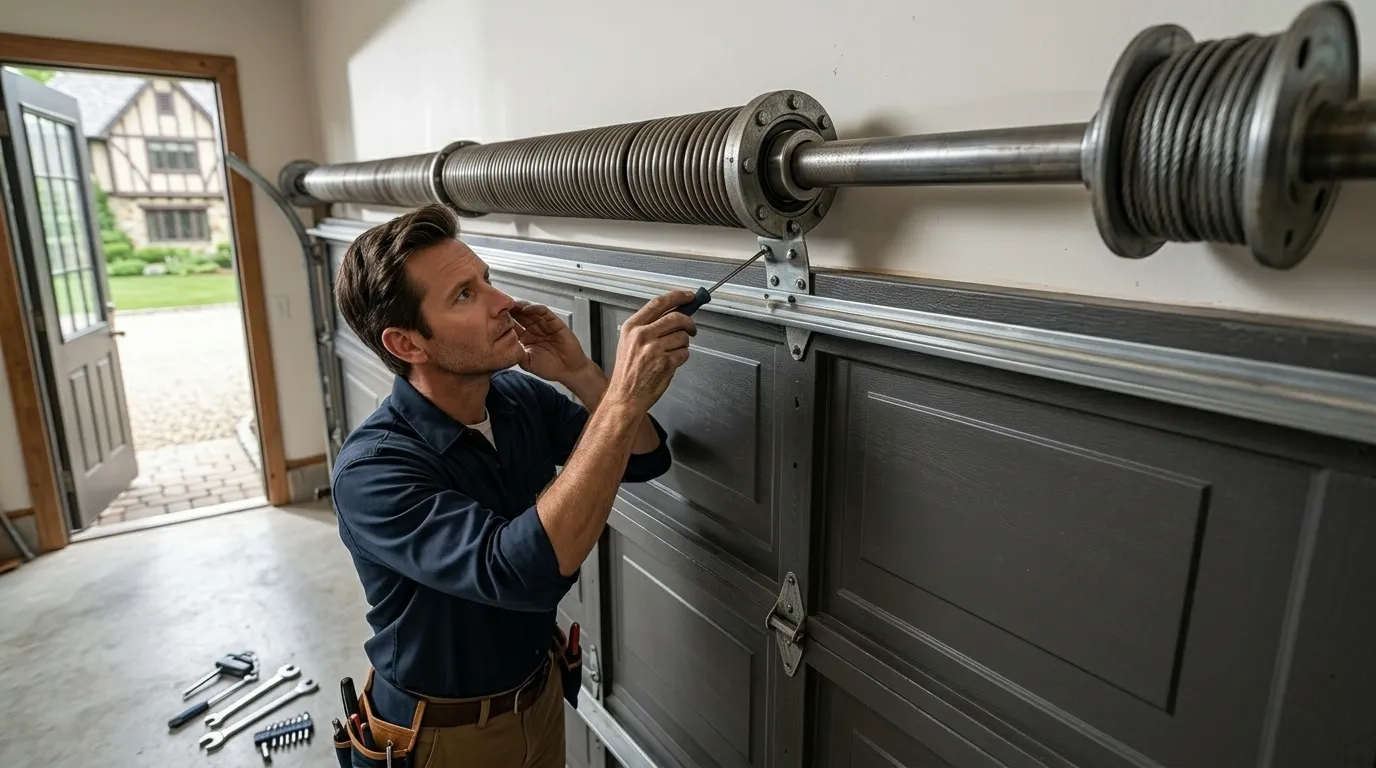
We don't quote a firm number over the phone, and that's not us being coy - it's because the job changes with the door in front of us. Most houses across this service area went up between 1967 and 2011, with the heaviest concentration from the 2000s, so a tech is usually looking at torsion hardware that's fifteen to twenty-some years old rather than the older extension-spring setups you'd find in a much older neighborhood. That changes what gets replaced: spring wire gauge and drum size on torsion systems aren't universal, so a call almost always starts with the tech measuring the door, counting cable wraps, and checking whether the opener is original to the house or already a replacement.
A single spring on a light aluminum door is a different job than a matched pair on a heavy insulated double door, and the hardware age tells us which one we're dealing with before we even open a panel. What we can tell you up front is the shape of the visit: diagnosis, a parts and labor breakdown before anything is touched, and the repair or a straight recommendation to replace if the door's past the point where fixing one part just exposes the next failure.
The area
Where People Go Wrong
The most common mistake we see is a homeowner trying to adjust a torsion spring themselves after watching a video shot on a different door entirely. Torsion springs on the doors common to this area's 2000s-era housing stock are wound under real tension, and the winding bars and drum setup vary enough between manufacturers that a video made for one door can get someone hurt on another. The second mistake is quieter: people replace the opener when the real problem is a misaligned photo-eye sensor or a track that's bent a quarter inch from a bumped car.
Swapping the opener fixes nothing if the sensors still can't see each other, and we get called back a week later on the same door. Third, painting over roller tracks to match trim looks fine for about a season, then the paint gums up the roller path and the door starts binding. None of these are dramatic failures - they're small shortcuts that turn into a service call anyway, usually a more expensive one than if the original issue had been looked at first.
What we find
What the Weather Here Does to It
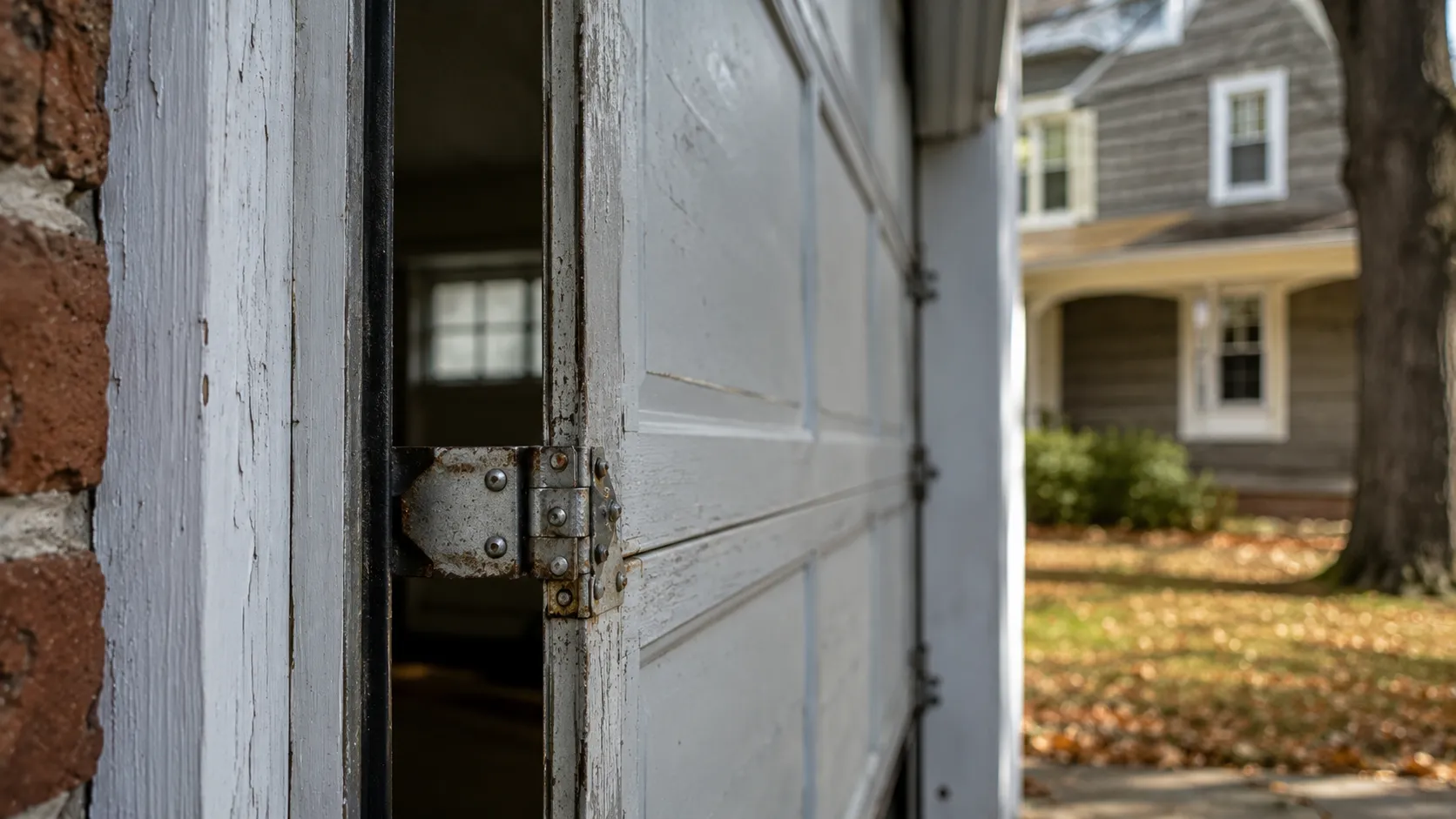
Charlotte sits in a cold-moderate climate band - we don't get the deep, sustained freezes that crack steel outright, but we get enough temperature swing and humidity to work on hardware slowly instead of all at once. Grease on rollers and tracks thickens on cold mornings, which is why a door can sound rough on a 35-degree start and smooth out by afternoon; that's not the door failing, that's lubricant doing what cold lubricant does. The bigger issue is moisture cycling: garages here go through repeated damp-then-dry stretches rather than one hard winter, and that's what pits torsion springs and cables with surface rust over a few years, especially on doors original to the 1967-2011 housing stock that haven't been relubricated.
We don't see the ice-dam or snow-load calls that colder regions deal with. What we do see is corrosion working quietly on hardware that's otherwise fine, which is why a lubrication and hardware check on an older door catches problems before a cable frays through.
How we work
The Situation
Across this service area - roughly 83,123 households, with about 57,865 of those in owner-occupied houses - the housing stock runs from 1967 up through 2011, median right around 2001, spread across more than twenty named areas from center-city neighborhoods like Dilworth and Myers Park a mile or two out, to Pineville and Mint Hill nine and ten miles off, out to Weddington, Indian Trail, and Davidson closer to the edge of what we cover. That range matters for service calls: a door a mile from center city and a door out past Stallings can be the same age and the same hardware, or they can be a decade apart, and we don't assume either way - we check. With a median household income of $94,390 across the area, most of the calls we take lean toward repair - spring, opener, cable, track - rather than straight replacement, though a door that's been patched three times already is usually cheaper to replace than to keep chasing.
Questions
Common questions
Do you give a price over the phone before seeing the door?
Not a firm one. Spring size, drum type, and cable wraps vary enough between doors - especially given how much of the housing here spans 1967 to 2011 - that a real number comes after the tech looks at the actual hardware, not from a description over the phone.
Why does my door feel stiff in the morning but fine by afternoon?
That's usually cold-thickened grease on the rollers and track, common in this climate band's morning temperature swings. It's not a sign of failure on its own, though if it's paired with grinding or a hard stop, have it checked before it turns into a cable problem.
My opener is original to the house - is it worth fixing or replacing?
Depends on the age and what's actually wrong. If the housing stock here runs mostly 1967-2011, a lot of original openers are past the point where boards or gears are worth chasing individually. We'll tell you straight which side of that line yours is on.
Do you cover areas outside Charlotte proper?
Yes - the service area runs out to places like Pineville, Mint Hill, Stallings, Belmont, and Mount Holly, roughly nine to twenty miles from center city, along with the closer-in neighborhoods.
Ready when you are
Need a garage door sorted in Charlotte?
Charlotte Garage Door Pros repairs and installs garage doors, springs and openers in Charlotte, NC and the surrounding area.