
Guide
What Charlotte's Cold Snaps Actually Do to a Torsion Spring
Cold snaps crack torsion springs on Charlotte's two-car doors built 1967-2011. Here's what drives the failure and what the repair job actually involves.
Local detail
The Cost of This Job
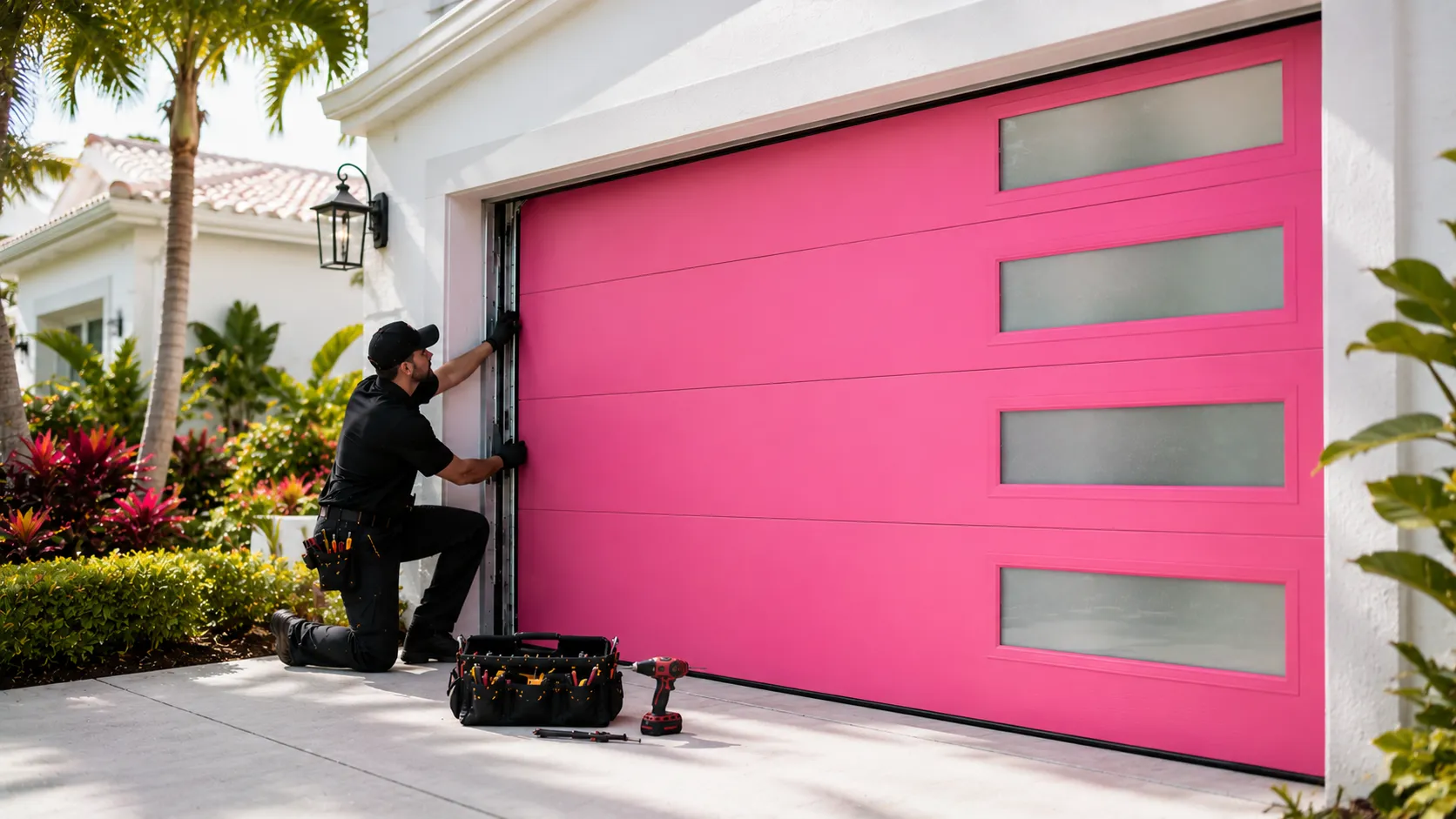
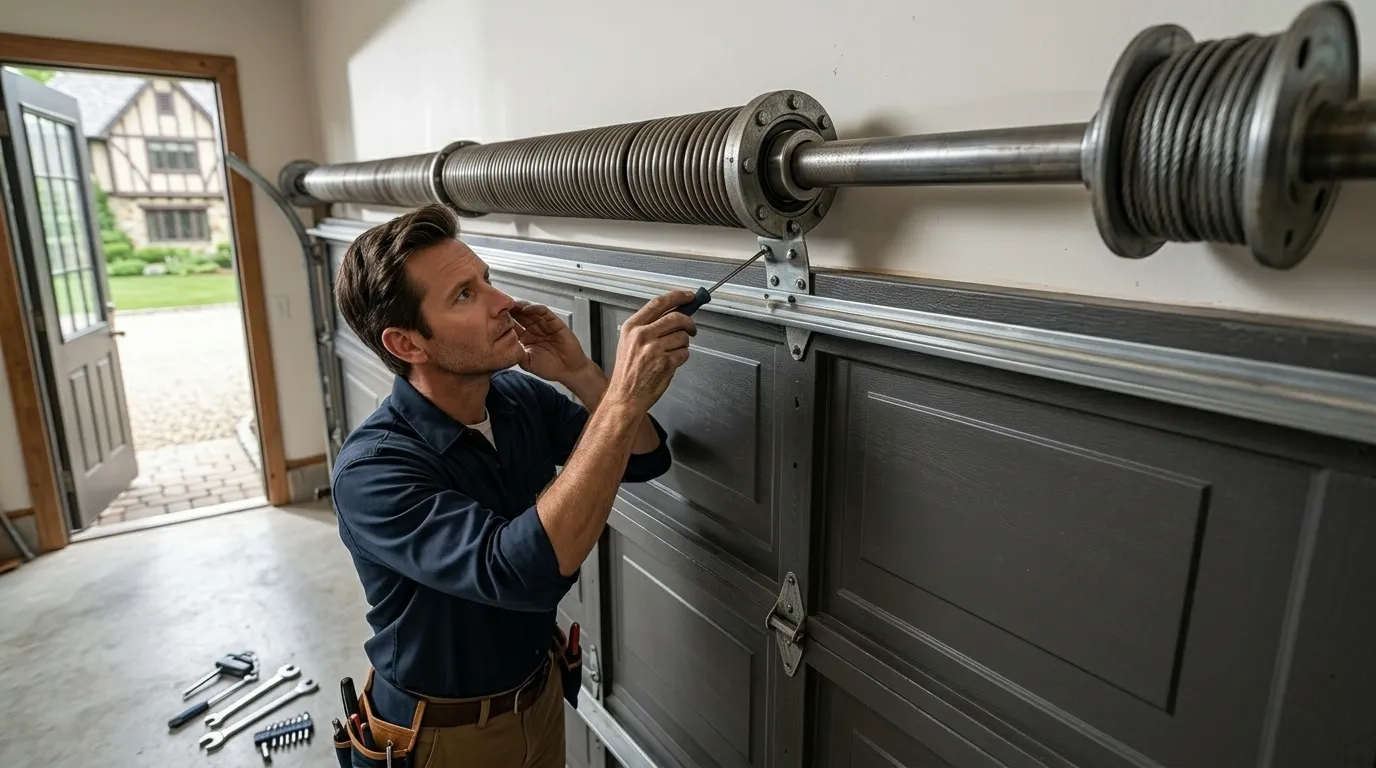
We're not going to give you a number here, because we don't know what's on your door until we're standing in front of it. What we can tell you is what drives the job either way. Most houses in this service area went up between 1967 and 2011, median around 2001, which means the standard setup on a driveway around here is a two-car door on a pair of torsion springs mounted on a steel shaft above the opening - not the single extension spring you'd find on an older detached one-car door. That matters because a broken torsion spring almost never travels alone.
If one side has gone, the other is usually close behind on the same wear curve, and most shops (us included) will tell you to do both at once rather than pay for the truck roll twice. Add in whether the cables came off the drum with it, whether the rollers are original and dragging, and whether the bottom bracket got bent when the door dropped - each of those changes the job. The honest limitation: if you want a firm number before we've seen the spring size, gauge, and wind, anything we quote over the phone is a guess, and we'd rather not guess.
The area
Where People Go Wrong
The most common mistake isn't touching the spring - it's what happens right before someone calls. A door that won't lift, or drops fast and slams, gets read as an opener problem. People replace the opener logic board or the remote, run the door a few more times on a chain drive that's now pulling weight it was never built to move, and strip the gear before the spring ever gets addressed.
The second mistake is reaching for a jack, a pry bar, or a 2x4 to hold the door up and finish the job themselves. A wound torsion spring under tension on a shaft is not a weekend project; it's the reason this trade exists. The third mistake, more specific to houses in this area, is assuming a door built in the 2000s has newer hardware everywhere else too.
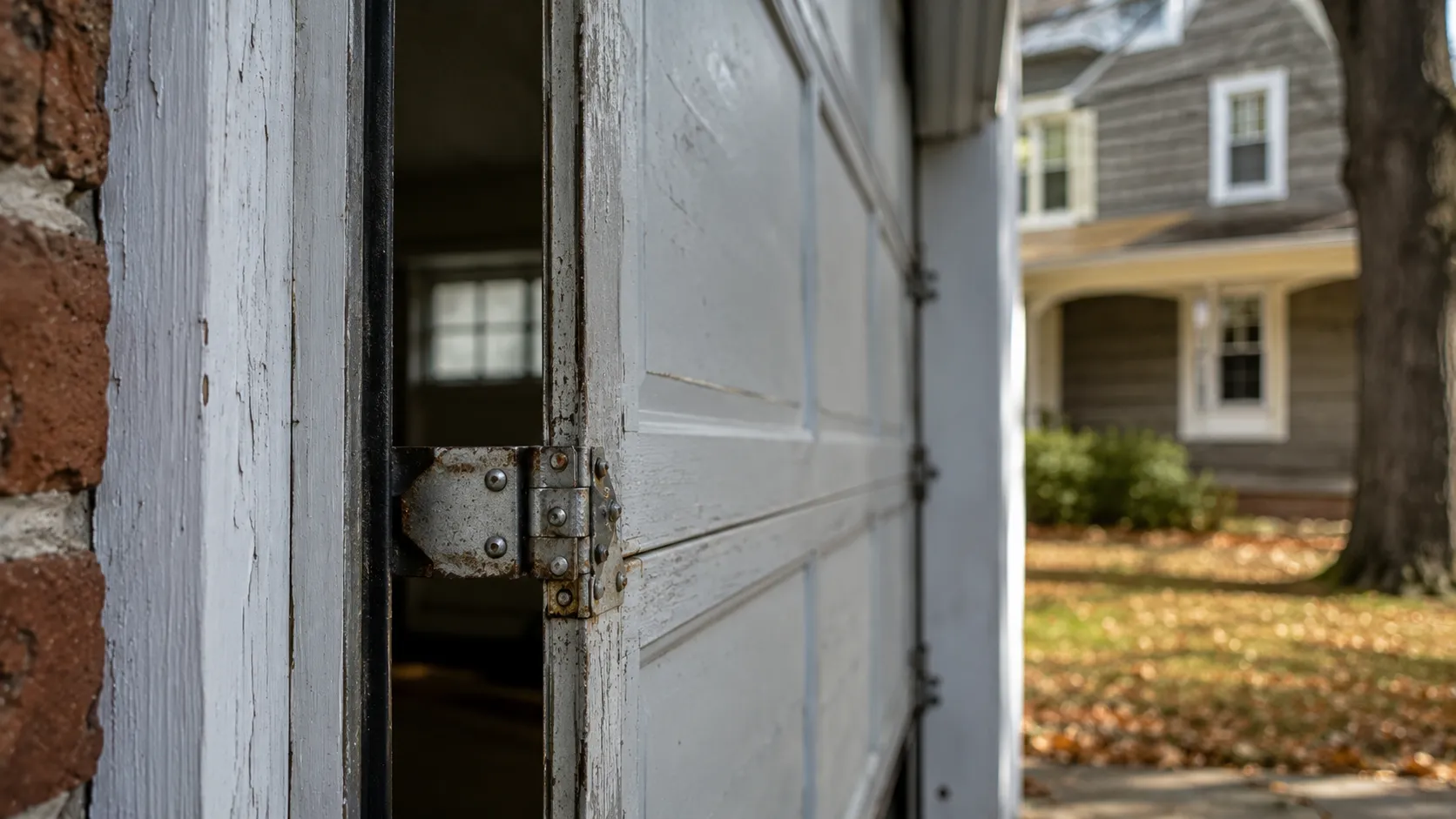
It usually has one original spring set doing nine or ten years of daily cycles, on a two-car door that's heavier than the single-car doors from decades earlier. People treat the age of the house as new; the spring doesn't care what year the house was built, it cares how many times it's wound and released.
What we find
What the Weather Here Does to It
Charlotte sits in a cold-moderate band - we don't get weeks of sub-zero mornings, so people assume the metal doesn't care about the cold. It does, just differently. A torsion spring doesn't snap from steady cold; it snaps from the swing. A 58-degree afternoon followed by a 28-degree morning contracts the steel coil fast, and if there's already a hairline fracture from years of winding and unwinding, that swing is what finishes the job.
That's why the calls cluster on the cold mornings after a mild stretch, not during the coldest week of the year. It's also why a spring that's been fine for eight winters can go on the ninth cold front with no warning at all - the fatigue was already there, the temperature drop just found it. This isn't a coastal-humidity problem or a snow-load problem; it's a metal-fatigue-meets-temperature-swing problem, and it's the specific way our winters here work on hardware that's already near the end of its cycle count.
How we work
The Situation
Across the 21 named areas we cover - close in around Elizabeth, Dilworth, First Ward, and Myers Park, and out past nine to twenty miles to places like Pineville, Harrisburg, and Unionville - the housing stock is close enough in age that spring failures tend to cluster in the same cold weeks each winter, not spread evenly across the calendar. With roughly 83,123 households in the area and 57,865 of those in owner-occupied houses, and a median household income near $94,390, most of what we see is people who'd rather do the job right once than patch it twice. That shapes how the work goes: when a spring goes in cold weather here, the call is usually about a two-car door, original hardware, and an owner who wants both springs done and the door checked over rather than a one-off fix that leaves the other spring to fail on the next cold morning.
Questions
Common questions
Why did my spring break on a cold morning when it's been fine for years?
It's not the cold alone - it's the swing. A mild afternoon followed by a cold morning contracts the steel fast, and if the coil already had fatigue built up from years of winding and unwinding, that temperature drop is what finishes it. The spring was already close to failing; the cold snap just picked the morning.
Do I need to replace both springs or just the broken one?
If your door has two springs, both are usually close in wear, since they cycle together every time the door runs. Most owners in this area choose to do both at once rather than pay for a second truck visit a few months later when the other one goes.
Can I get a price over the phone?
Not an accurate one. Spring size, wire gauge, and wind direction vary by door, and we won't know those until we've looked at the shaft and the brackets. We'd rather see it than guess and be wrong.
My door is heavy and drops fast - is that the spring or the opener?
That's almost always the spring, not the opener. A broken or weakened torsion spring means the opener is trying to lift the full weight of the door alone, which is why it strains, slows, or drops. Running the opener repeatedly in that state is how you burn out the drive gear too.
Ready when you are
Need a garage door sorted in Charlotte?
Charlotte Garage Door Pros repairs and installs garage doors, springs and openers in Charlotte, NC and the surrounding area.