
Guide
What That Noise Is Actually Telling You
Charlotte homes built mostly from the 1990s through the 2000s have specific noise patterns as original hardware ages. Here's what each sound means and when to worry.
Local detail
The Cost of This Job
We can't quote a number here without a look at the door, because the noise you hear points to a handful of different jobs with a handful of different price tags. A dry roller squeal might be a five-minute lube job. A rhythmic thunk on the way down is often a bent track bracket, which is a bracket and a bolt, not a whole door. A grinding sound from the spring side of the header is a different conversation entirely, and if that spring dates back to when the house was built, you're not fixing it, you're replacing it.
What we can tell you is that most of the doors we open up in this area were installed somewhere in the 1967 to 2011 window, with the bulk of the stock going in during the 2000s. That means a lot of original torsion springs and original nylon rollers are now old enough that the noise they're making isn't a fluke, it's the hardware telling you its rated cycle count is behind it. Don't let anyone quote you over the phone before they've heard the sound in person.
The area
Where People Go Wrong
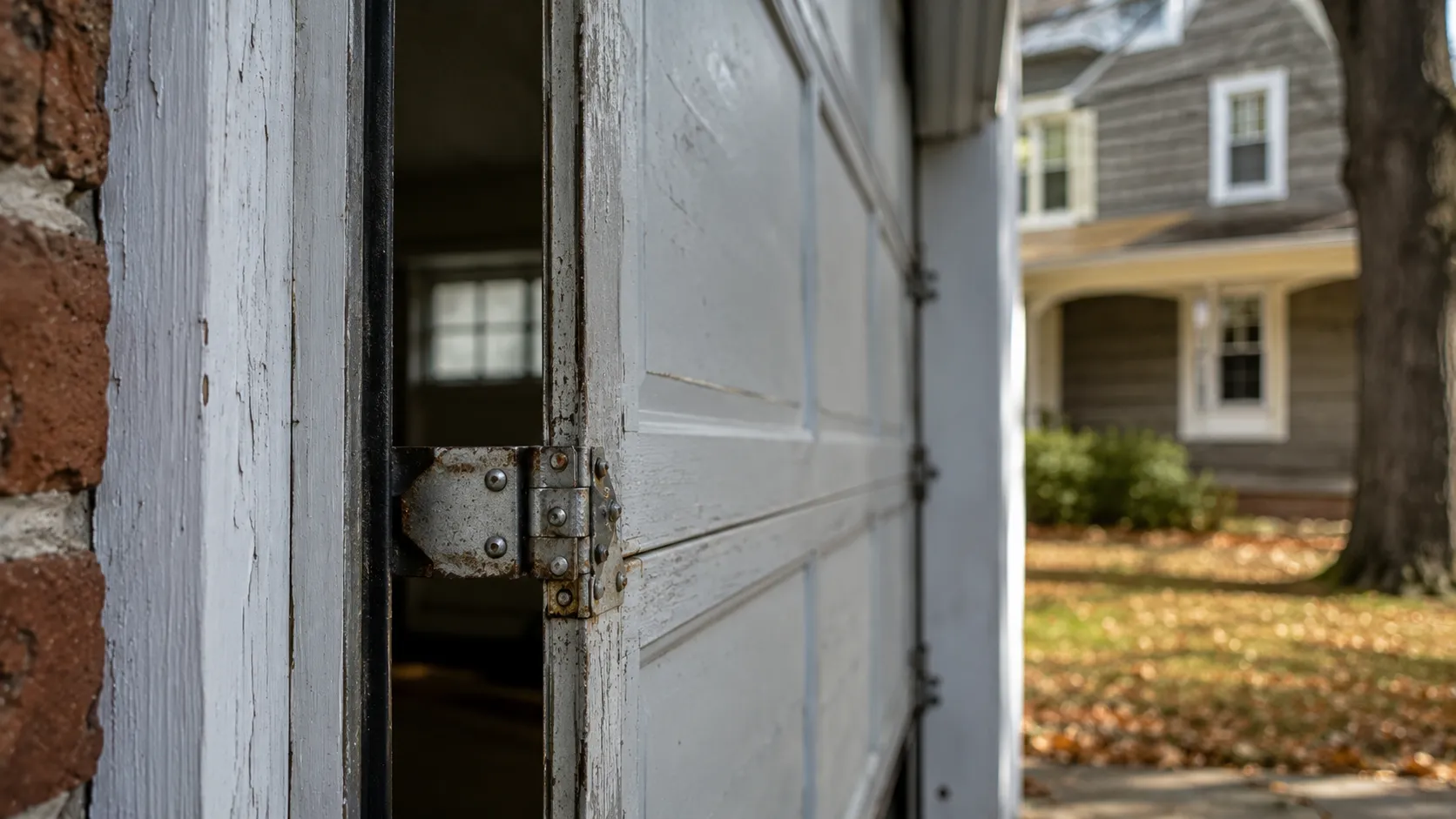
The mistake we see most in this area is homeowners spraying WD-40 on everything and calling it maintenance. WD-40 is a solvent, not a lubricant, and on the steel rollers and hinges common to the 2000s-era doors that make up most of this housing stock, it strips what grease is left and makes the squeal worse inside a month. The second mistake is ignoring a noise that only happens in certain weather, because that's not random, that's information.
A door that's quiet in summer and starts groaning on cold mornings is usually telling you about metal contraction at a joint that's already a little loose, not about anything you did wrong. The third mistake, and the costliest, is waiting on a noise from the spring side. A spring that's straining makes a sound before it lets go, and on a door of this housing era's original hardware, that sound means the spring is near end of life, not that it needs oil.
We won't pretend every noise is an emergency. Most aren't. But the ones from the top of the door, near the header, are the ones worth a same-week look instead of a shrug.
What we find
What the Weather Here Does to It
Charlotte sits in a cold-moderate climate band, which is a milder story than the deep freeze towns get, but it's not nothing for a garage door. The swing between a humid summer afternoon and a cold snap overnight is enough to make steel track brackets and hinge pins contract and expand on a cycle, and on hardware that's been through a couple of decades of that cycle already, that's exactly where the popping and clicking sounds start. It's not damage in the moment.
It's metal fatigue accumulating one temperature swing at a time. On a house from this area's typical build era, torsion springs also stiffen slightly in cold weather, which changes the pitch of the sound the door makes on its way up on a cold morning versus a warm one. That's normal and not a reason to call.
What isn't normal is a new grinding or a loud bang that shows up specifically after a cold snap, because that's usually a spring or a bearing that was already near failure and the cold pushed it over the edge. We don't get the kind of extreme freeze that snaps springs outright the way a harsher climate does, so when we do see a cold-triggered failure here, it's almost always a part that was already worn.
How we work
The Situation
Across this service area there are roughly 83,123 households, with about 57,865 of those in owner-occupied houses, and a median household income near $94,390 - which is context for why we see a real mix on service calls: people who fix the noise the day they hear it, and people who've been living with it for a year and finally call when it stops going up at all. Neither is wrong. But a door built in the 2000s, which describes most of what's out there in this area, is now old enough that noise isn't cosmetic anymore.
It's data. Our limitation here is honest: we can't diagnose a specific noise over the phone with any confidence, and we won't try to sell you a fix sight unseen. What we can tell you, based on the age of housing typical to this area, is that if your door is groaning, popping, or grinding and it's original equipment, you're closer to the end of that hardware's life than the beginning of a maintenance schedule.
Questions
Common questions
My garage door squeals every time it opens. Is that urgent?
Usually not urgent, but don't ignore it either. A squeal is almost always a dry roller or hinge, and on the 2000s-era hardware common in this area, dry rollers eventually wear grooves that need more than lubricant to fix. Get it lubed properly (not with WD-40) and if the squeal comes back within weeks, have someone look at the rollers themselves.
Why does my door make a different sound in cold weather?
Charlotte's cold-moderate climate still puts enough swing between summer and winter temperatures to make steel brackets and hinge pins contract and expand. On older original hardware that's typical for this area's housing stock, that shows up as new pops or clicks on cold mornings. It's usually normal aging, not a fresh problem, unless it's paired with a grinding or banging sound.
A loud bang came from my garage this morning. What was that?
That's very likely a torsion spring breaking, especially if the door won't lift or feels far heavier by hand afterward. Given how much of this area's housing dates back to the 1967-2011 build window, original springs reaching end of life is common. Don't try to open the door with the opener. Call it in.
Can I just oil everything and see if the noise stops?
Lubricating rollers, hinges, and the top of the track can quiet some noises, but it won't fix a bent bracket, a worn bearing, or a spring near failure. If a proper lube job doesn't quiet things down within a day or two of use, the noise is pointing at a part, not a lack of grease.
Ready when you are
Need a garage door sorted in Charlotte?
Charlotte Garage Door Pros repairs and installs garage doors, springs and openers in Charlotte, NC and the surrounding area.